

As an affiliate, we may earn a commission from qualifying purchases. We get commissions for purchases made through links on this website from Amazon and other third parties.
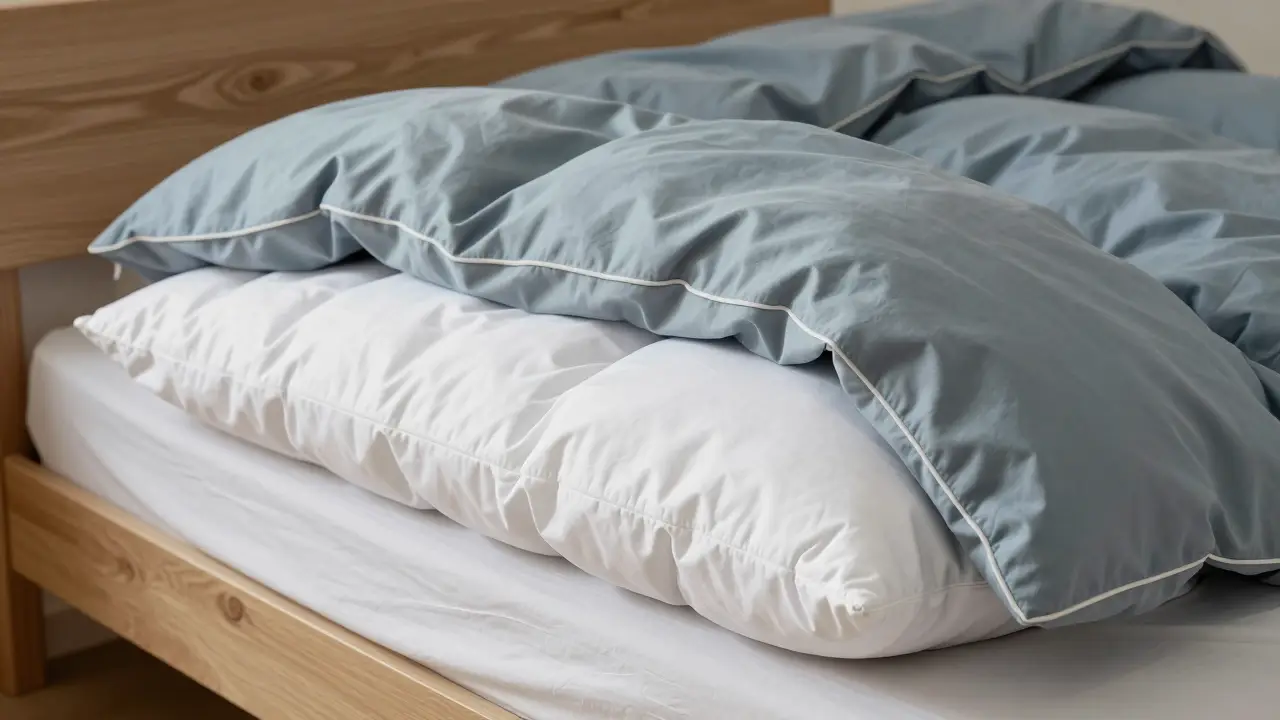
A good duvet setup starts by separating two purchases that listings often blur together. The insert supplies loft and warmth. The cover is the removable outer shell that changes the surface feel, protects the insert, and makes regular washing easier.
The useful distinction in balanced duvet inserts is between a brief cool touch and comfort maintained through airflow and moisture control.
That distinction matters more than brand names. An 88-by-88-inch queen insert does not automatically fill every queen cover well, and a cover with eight ties cannot use all eight attachment points if the insert only has four compatible loops. Start with dimensions and hardware, then choose warmth and fabric.
When comparing reasons to choose a duvet, prioritize relevant dimensions, durable construction, manageable care, and the intended role.
Best Insert Overall
Best Queen Cotton Cover
Best King Cotton Cover
Duvets and Duvet Covers at a Glance
| Pick | Type | Size | Material | Main reason to choose it |
|---|---|---|---|---|
| Bedsure GentleSoft | Insert | Queen 88 x 88 in | Polyester shell and fill | Eight attachment tabs and broad size range |
| Utopia Bedding | Insert | Queen 88 x 88 in | Polyester microfiber and fill | Simple box-stitched value insert |
| Bedsure Washed Cotton | Cover set | Queen 90 x 90 in | 100% washed cotton | Eight ties and zipper closure |
| California Design Den | Cover set | King 106 x 90 in | 400 TC cotton sateen | Smooth natural-fiber king cover with shams |
| Bare Home | Cover set | Queen 90 x 90 in | Polyester microfiber | Lightweight, easy-care cover |
Decide Whether You Need an Insert or a Cover
Bedsure GentleSoft and Utopia Bedding are filled inserts. You can use them as comforters or place them inside a removable duvet cover. California Design Den, Bedsure Washed Cotton, and Bare Home are cover sets only; they do not provide the filled layer that creates loft and warmth.
To judge duvet-versus-comforter tradeoffs, consider materials, construction, fit, maintenance, and intended use together.
If you already own a good insert, replacing the cover can be the cheaper way to change the bed's feel or appearance. If your current duvet is flat, uneven, too warm, or too small for the bed, replacing only the cover will not solve that problem.
Judge lightweight duvet inserts by sustained airflow, moisture handling, insulation, and room conditions rather than first touch alone.
Match Dimensions Before Bed-Size Labels
The queen inserts here measure 88 by 88 inches, while the queen covers measure 90 by 90 inches. That two-inch difference is small enough to be workable, but it does not guarantee a full, even fit. Fill volume and attachment-point placement still affect how the insert sits inside the cover.
A much larger mismatch is different. Too much cover fabric can wrinkle and pool around the insert. A cover that is much smaller can bunch or compress the fill. Measure width and length with both pieces laid flat instead of relying only on the words queen or king.
Our Five Picks
1 / 5
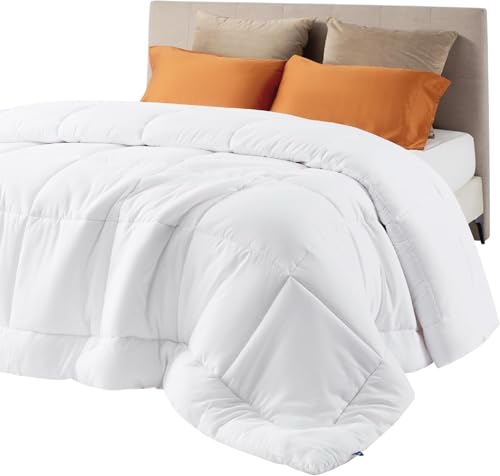
Bedsure GentleSoft Queen Duvet Insert
Type
Duvet insert
Prepared size
Queen 88 x 88 in
Shell and fill
100% polyester
Attachment
8 tabs
Bedsure's GentleSoft insert is the most flexible filled option in this group. The queen version here measures 88 by 88 inches, while the product family covers several other bed dimensions. Its polyester shell and polyester fill are divided by box stitching, and eight tabs provide multiple attachment points for a compatible cover.
It arrives compressed, so the brand directs buyers to fluff it and allow as much as 24 to 48 hours for full loft recovery. That wait matters. Judging a vacuum-packed insert immediately after opening can make a normal compression issue look like a permanently flat comforter.
The feel runs soft and airy, but warmth is mixed. It can work across changing seasons yet still feel too warm in hot summer rooms. “All season” is best treated as positioning rather than a promise that every hot sleeper will stay cool.
Why It Works
- Eight tabs offer more potential anchor points than a four-corner insert.
- Box stitching helps keep synthetic fill distributed.
- Multiple sizes make it easier to choose more or less drape intentionally.
- Cold machine washing and low tumble drying simplify routine care.
What To Keep In Mind
- Give the compressed insert time to recover before judging loft.
- Some sleepers still find it warm in hot rooms.
- Sizing up changes drape and weight; it is not automatically better for every bed.
2 / 5
Utopia Bedding Queen Duvet Insert

Type
Duvet insert
Prepared size
Queen 88 x 88 in
Material
Polyester microfiber and fill
Attachment
Corner tabs
Utopia Bedding is the simpler insert choice. The queen version here is also 88 by 88 inches, with polyester microfiber fabric, synthetic fill, piped edges, box stitching, and corner tabs for attaching a cover.
Its strongest role is lightweight everyday bedding rather than maximum hotel-style loft. It feels soft and warm without much bulk, but the loft can look thinner than buyers expecting a puffier duvet. The insert may also arrive flat from compression and improve after airing and fluffing.
Care is straightforward but still worth planning around washer capacity. The guidance calls for cold gentle washing and either line drying or no-heat tumble drying.
Why It Works
- Clear 88-by-88-inch queen dimensions make cover matching easier.
- Box stitching reduces large-scale fill migration.
- Corner tabs support basic insert-to-cover attachment.
- The lighter feel suits sleepers who dislike very bulky bedding.
What To Keep In Mind
- It may look thinner than buyers expecting a high-loft hotel duvet.
- Corner tabs offer fewer anchor points than an eight-tab insert.
- Make sure your washer can handle a wet queen insert without overloading.
3 / 5
Bedsure Washed Cotton Duvet Cover Set

Type
Duvet cover set
Prepared size
Queen 90 x 90 in
Fabric
100% washed cotton
Attachment
8 reinforced ties
Closure
Zipper
Bedsure's washed-cotton set is the most attachment-focused queen cover in this guide. The 90-by-90-inch cover includes two pillow shams, eight reinforced interior ties, and a zipper closure. The fabric is 100% washed cotton with a relaxed, linen-inspired appearance rather than a polished sateen sheen.
That hardware is useful when your insert offers compatible loops or tabs in the same positions. Eight ties provide more possible anchor points than four corner ties, but unused ties provide no benefit if the insert has nowhere to attach them.
Texture is the main uncertainty. The cotton can feel lightweight and comfortable, but it can also stay much rougher than expected after repeated washing. “Washed cotton” should not be read as a guarantee of immediate softness.
Why It Works
- Eight reinforced ties provide several potential anchor points.
- A zipper creates a continuous closure at the opening.
- The 90-by-90-inch queen dimension pairs naturally with many 88-by-88 inserts.
- Cotton gives the bed a natural-fiber surface.
What To Keep In Mind
- Texture reports range from soft to notably scratchy.
- This is a cover and shams only; no insert is included.
- Match attachment points instead of assuming eight ties will all be usable.
4 / 5
California Design Den Cotton Sateen King Duvet Set

Type
Duvet cover set
Prepared size
King 106 x 90 in
Fabric
400 TC cotton sateen
Pieces
3
California Design Den is the king-size cotton option in this mixed guide. The cover measures 106 by 90 inches and comes with two 21-by-37-inch king shams. Its 400-thread-count cotton uses a sateen weave, giving the fabric a smoother, slightly more polished feel than crisp percale.
The dimensions are the strongest buying signal. If your king insert also measures close to 106 by 90 inches, the pairing is easier to predict than buying from bed-size labels alone. The sateen can feel soft and comfortable and hold up well through washing, but finishing is inconsistent: buttons can loosen, seams can fail, some fabric feels scratchy, and colors may differ slightly from photos.
Those negatives matter because thread count cannot compensate for weak stitching or hardware. Inspect the cover before washing and make sure the insert fits without stressing the opening.
Why It Works
- Exact 106-by-90-inch dimensions simplify king insert matching.
- Cotton sateen offers a smooth natural-fiber surface.
- Two king shams make the set visually coordinated.
What To Keep In Mind
- Button and seam durability can be inconsistent.
- Cotton can wrinkle when left sitting after drying.
- Choose the color carefully if a precise shade matters.
5 / 5
Bare Home Queen Microfiber Duvet Cover Set

Type
Duvet cover set
Prepared size
Queen 90 x 90 in
Fabric
Polyester microfiber
Pieces
3
Bare Home is the easy-care alternative to the cotton covers. The queen set includes a 90-by-90-inch cover and two standard shams. Hydro-brushed polyester microfiber gives it a smooth synthetic surface, distinct from the more textured washed-cotton option above.
Corner ties help hold a compatible insert. If closure style matters to you, check the exact size and color option before ordering rather than assuming every Bare Home cover uses the same opening.
This is the better fit for buyers who prioritize simple laundering and a soft synthetic surface over a natural-fiber feel. Microfiber will not mimic cotton sateen or washed cotton, but its low-maintenance behavior is the point.
Why It Works
- Lightweight microfiber is convenient for frequent washing.
- The 90-by-90-inch queen dimensions are easy to compare with an insert.
- Corner ties add basic insert retention.
- The set includes two standard shams.
What To Keep In Mind
- Check the exact option if closure style matters to you.
- Microfiber feels different from cotton and may not suit natural-fiber shoppers.
How to Build a Better Duvet System
Match insert and cover measurements
Measure both pieces. A small difference such as 88 by 88 inside 90 by 90 can be workable; a much larger mismatch is more likely to create empty fabric or compressed fill.
Match ties to tabs
A cover with eight ties works best with an insert that also provides attachment points around the perimeter. Four-corner inserts can still be used, but the extra ties cannot help unless they have somewhere safe to attach.
Choose warmth separately from surface feel
The insert supplies most of the insulation. The cover changes the fabric against the sleeper, adds some weight, and determines much of the regular laundry routine. A cool-feeling cotton cover cannot fully cancel a very warm insert.
Follow separate care instructions
The insert and cover are two different textiles. Remove the cover before washing, then follow each care label independently. Avoid assuming the same heat setting is appropriate for both pieces.
Frequently Asked Questions
What is the best duvet insert in this guide?
Bedsure GentleSoft is the strongest all-around insert here because it combines box stitching, multiple size options, machine care, and eight attachment tabs. Utopia Bedding is the simpler lightweight alternative.
What is the best duvet cover in this guide?
Bedsure Washed Cotton is the most attachment-focused queen cover because it combines a 90-by-90-inch size, eight reinforced ties, and a zipper. California Design Den is the stronger king-size cotton option.
Can an 88-by-88-inch insert fit a 90-by-90-inch cover?
Often, yes. The two-inch difference is small enough to be workable, but it does not guarantee an even fit. Fill volume and attachment points still matter.
Do more duvet ties always work better?
Only when the insert has compatible loops or tabs. Extra ties cannot correct a large size mismatch or attach safely where no loop exists.
Is cotton better than microfiber for a duvet cover?
Not universally. Cotton offers a natural-fiber feel and more body, while microfiber is lighter, smoother, and usually easier to wash and dry.
Should a duvet cover use a zipper or buttons?
Both can work. A zipper closes the opening continuously, while individual buttons are easier to replace if one fails. Construction quality matters more than the closure name alone.
Do I need a cover if my duvet insert is washable?
No, but a removable cover lets you wash the outer layer more often and change the bed's feel or appearance without replacing the filled insert.
Learn why people sleep with a duvet cover and how the removable shell protects the filled insert. If attachment points are the priority, review how duvet ties and loops work. For easier bed making, see why duvet covers can be difficult to put on. If closure style is your deciding factor, compare zippers and buttons on duvet covers.
