

As an affiliate, we may earn a commission from qualifying purchases. We get commissions for purchases made through links on this website from Amazon and other third parties.
A bed-bug mattress cover has one job that a fitted protector cannot do: fully surround the mattress and keep the zipper boundary closed. That makes exact depth, fabric integrity, and zipper condition more important than plushness or extra padding.
Before choosing mattress protector comparison, compare materials, construction, dimensions, care, and the job the product must do.
All three picks here are six-sided encasements. The main differences are mattress depth, fabric feel, and how consistent the barrier details are across variants. An encasement can be one part of a bed-bug control plan, but it should not be treated as a substitute for professional pest-control guidance when an infestation is active.
To judge mattress protector use, consider materials, construction, fit, maintenance, and intended use together.
Best for Deep Queens
Best for Mattresses Up to 12 Inches
Best for Mid-Depth Queens
Bed Bug Mattress Covers at a Glance
| Pick | Stated fit | Main strength | Main tradeoff |
|---|---|---|---|
| SureGuard | Queen, 13-16 in | Defined deep-mattress range and explicit long-term enclosure guidance | Variant material, depth, and waterproofing details vary |
| Linenspa | Queen, up to 12 in | Lightweight six-sided cover | Can trap air or fit loosely when oversized; waterproof performance varies |
| Utopia Bedding | Queen, up to 15 in | Wraparound zipper and smooth polyester construction | Variant material and depth details vary; exposed fabric can tear |
Measure Depth Before You Buy
Measure the mattress at its thickest point, not just the center. A cover that is too shallow puts tension on seams and zipper teeth. One that is much too deep can leave loose fabric and trapped air under the sheet.
The practical comparison for mattress encasement selection includes build quality, dimensions, everyday care, and expected use.
If the mattress is heavy, plan on two people for installation. A full encasement has to slide around the whole mattress before the zipper closes, which is much harder than fitting a normal protector.
Our Three Picks
1 / 3
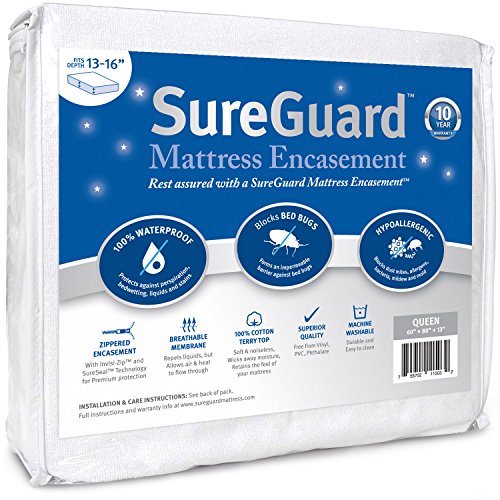
SureGuard Mattress Encasement
Coverage
Six sided
Queen depth selection
13-16 in
Closure
Full zipper
Care
Machine wash and dry
SureGuard is the clearest choice for a deeper queen because this option covers a 13- to 16-inch mattress range. Its instructions call for keeping the encasement on an infested mattress for at least one year as part of the containment plan.
Variant material, dimension, and waterproofing details vary, but the 13-to-16-inch option can fit a 16-inch mattress well. Installation can still be a two-person job. Choose it for the defined depth and full enclosure, not because every protection detail is equally certain.
Once installed, keep sheets over the cover to reduce friction, stains, and accidental snags during the long enclosure period.
Why It Works
- Defined 13-16-inch depth band suits deeper queen mattresses.
- Six-sided zipper surrounds the full mattress.
- Product instructions address long-term enclosure on an infested mattress.
What To Keep In Mind
- Variant material, depth, and waterproofing details vary.
- Full installation is easier with two people.
- It may not be compatible with every specialty mattress design.
2 / 3
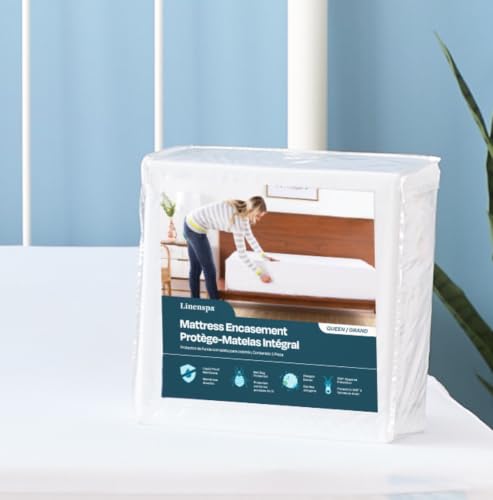
Linenspa Zippered Mattress Encasement
Coverage
360-degree encasement
Queen fit
Up to 12 in
Surface
Soft brushed polyester
Care
Machine washable, tumble dry low
Linenspa is the thinner, lighter option for queen mattresses up to 12 inches. Its brushed polyester surface is designed to stay quiet under sheets, and the full zipper closes around all six sides of the mattress.
Fit is the main issue to watch. An oversized cover can trap air on a shallow mattress, while the correct depth can stay secure. Waterproofing and dimension details also vary. For bed-bug containment, the more important questions are whether the fabric is intact, the zipper closes fully, and the cover is not loose enough to snag or tear.
Why It Works
- Clear 12-inch maximum mattress depth.
- Lightweight fabric is easier to handle than a thick padded cover.
- Machine-washable and low-heat dryer care are convenient.
What To Keep In Mind
- Oversizing can leave loose fabric or trapped air.
- Waterproof performance and dimension details vary.
- Inspect the zipper end and seams after installation.
3 / 3
Utopia Bedding Zippered Mattress Encasement

Coverage
Six sided
Queen fit
Up to 15 in
Closure
Wraparound zipper
Care
Machine wash, tumble dry low
Utopia Bedding covers a wider mid-depth range, with the queen encasement listed for mattresses up to 15 inches. The wraparound zipper and stretchy fabric are intended to make full installation easier while keeping the surface relatively smooth under regular sheets.
Variant material and dimension details vary, so match the selected size to your mattress depth. Exposed fabric can tear when dogs jump on the bed. If containment is the goal, protecting the encasement from claws, sharp bed hardware, and zipper strain matters as much as the initial installation.
Cover it with a fitted sheet as soon as the zipper is closed.
Why It Works
- Up-to-15-inch fit covers many standard and pillow-top queens.
- Wraparound zipper provides full enclosure.
- Easy-care washing and low-heat drying.
What To Keep In Mind
- Variant material and dimension details vary.
- Pet claws can puncture exposed fabric.
- Noise can range from quiet to slightly crinkly.
How Six-Sided Containment Works
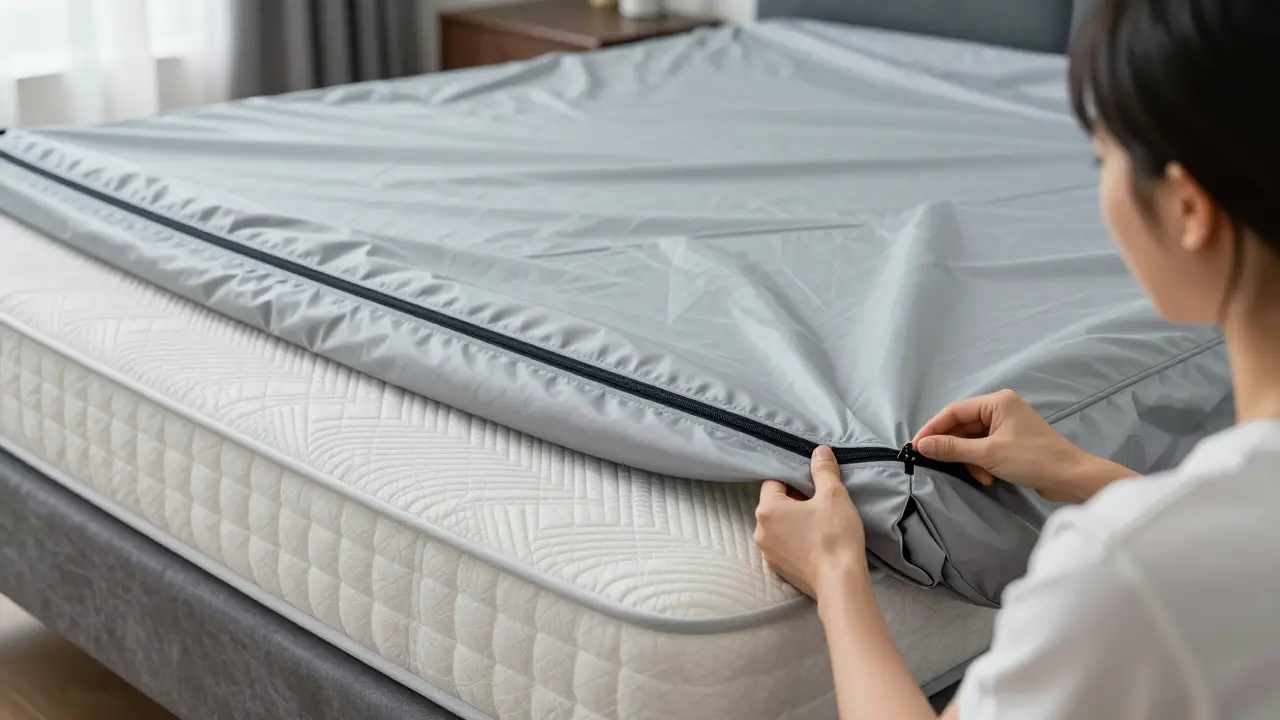
A bed-bug encasement is designed to create a continuous fabric barrier around the mattress. That boundary depends on the body fabric, seams, zipper track, and zipper endpoint all remaining intact. A gap or tear can break the enclosure even if the rest of the cover looks fine.
Keep sheets over the encasement after installation to reduce friction and snag risk. Inspect the zipper area periodically without repeatedly removing the whole cover during an active containment period.
Installation Tips
Use two people for a queen or king mattress when possible. Lift and feed the encasement gradually instead of dragging it against the bed frame. Once the mattress is inside, smooth excess air toward the open zipper before closing it.
Do not force the zipper if the fabric is pulled tight at the corners. Reposition the cover first. Excess zipper tension is a preventable failure point.
Frequently Asked Questions
Does a bed-bug mattress cover replace pest control?
No. An encasement can be part of a containment plan, but an active infestation may require professional pest-control treatment and inspection beyond the mattress.
How long should a bed-bug encasement stay on?
Follow the product and pest-control guidance for your situation. SureGuard calls for keeping its encasement on an infested mattress for at least one year.
Does mattress depth matter for bed-bug covers?
Yes. Too little depth strains seams and the zipper, while too much depth creates loose fabric that can bunch or snag.
Can pets damage a mattress encasement?
Yes. Dogs can tear exposed fabric before sheets are installed. Keep the encasement covered and away from claws or sharp objects.
Is waterproofing required for bed-bug containment?
No. Waterproofing is a separate function from the physical bed-bug barrier. For containment, intact fabric, seams, and zipper closure are the key construction concerns.
Can I wash a bed-bug encasement during use?
Follow the product and treatment instructions. If the cover is being used to contain an active infestation, repeatedly removing it may defeat the containment plan.
For related full-cover and spill-protection options, see mattress encasements, waterproof mattress protectors, and mattress protectors.
