

As an affiliate, we may earn a commission from qualifying purchases. We get commissions for purchases made through links on this website from Amazon and other third parties.
A portable washer only works in an apartment if the plumbing and floor plan cooperate. The tub may fit beside the sink, but the faucet adapter can fail to match, the drain hose may not reach, and a badly balanced sheet load can make the whole machine shake. Building rules also come first because some leases do not allow portable washers at all.
Before buying, check landlord restrictions on portable washers against the lease, building policy, drainage setup, and local requirements.
The Nictemaw portable washer is the best overall fit here for larger apartment loads because it combines a 2.4-cubic-foot tub with ten programs, eight water levels, a drain pump, and a relatively manageable 41.9-pound cabinet. The BLACK+DECKER is the better small-load choice when closet storage matters, while the smaller Giantex automatic is easier to place where a 17-inch-square footprint makes the difference.
Before buying, check portable-washer lease restrictions against the lease, building policy, drainage setup, and local requirements.
Best Overall
Best for Small Loads
Best Small Footprint
Portable Apartment Washers at a Glance
| Pick | Main advantage | Best fit | Main tradeoff |
|---|---|---|---|
| Nictemaw | 2.4 cu. ft., ten programs, eight water levels | Larger apartment laundry loads | Hose reach, leaks, and imbalance need attention |
| BLACK+DECKER | Compact automatic with five cycles | Small loads and closet storage | Limited tub room for bedding |
| Giantex 8 lb | 17-inch-square footprint and manual-fill option | Tight bathrooms or studio kitchens | Rust staining and leak reports |
| Giantex 1.34 cu. ft. | Ten programs and eight water levels | Buyers wanting more control in a compact cabinet | Conflicting load figures and early failures |
Measure the Whole Laundry Route
Start at the sink and work backward. Check faucet style, hose reach, drain position, cabinet clearance, and where the washer will live between loads. A machine can be compact without being easy to move, especially if it has to cross a threshold or squeeze between a vanity and toilet.
Common portable-washer drawbacks include small real-world loads, slower cycles, manual hookups, and greater leak risk.
Protect the floor too. A slow inlet drip, loose drain hose, or leaking pump can damage laminate, wood, cabinets, or the apartment below. A waterproof appliance tray can help contain a small leak when your building allows one, but it does not make an unsafe hose connection acceptable.
For washing a comforter in a portable washer, the item must move freely rather than remaining packed against the tub wall.
For sheets, leave room in the tub. Long fabric can wrap around itself and pull a small washer off balance during spin. Pause a banging cycle, untangle the load, and redistribute the weight rather than letting the machine continue to walk across the floor.
1 / 4
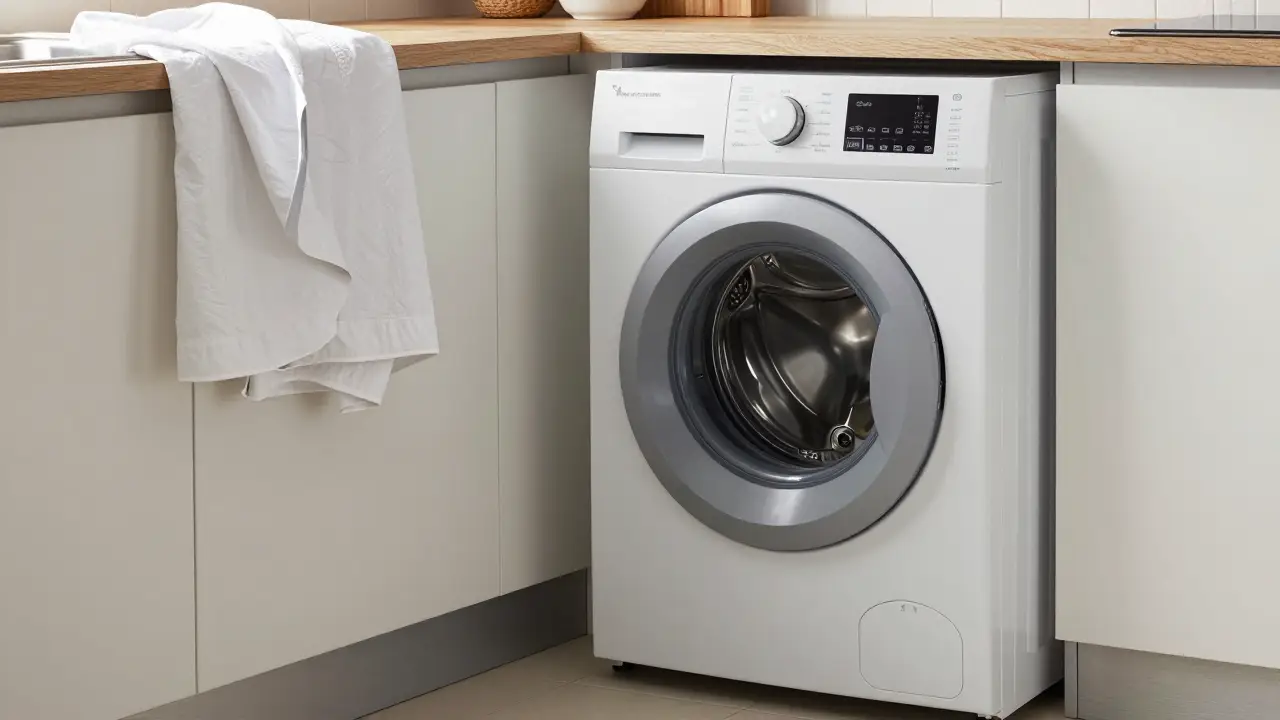
Nictemaw Portable Washing Machine

Tub
2.4 cu. ft.
Programs
10
Water levels
8
Weight
41.9 lb
Nictemaw gives apartment shoppers the most useful tub room in this group at 2.4 cubic feet, along with ten programs, eight water levels, a drain pump, and delay-start control. At 41.9 pounds, it is not featherweight, but it is easier to reposition than many larger portable automatics. The roughly 19-inch-square footprint also keeps it realistic for a bathroom or kitchen corner.
The main caution is water management. Hose reach can force the washer closer to the sink than expected, and bottom leakage has occurred. Large sheet loads can also create strong imbalance during spin. Use the extra tub room to give laundry space to move rather than treating it as permission to pack in the maximum possible amount.
Why It Works
- The 2.4-cubic-foot tub gives sheets and towels more room than the smaller machines here.
- Ten programs and eight water levels cover small and medium apartment loads.
- The built-in drain pump makes sink drainage easier than gravity-only setups.
- A 41.9-pound cabinet is manageable with a stable rolling platform when needed.
What To Keep In Mind
- Make sure both hoses reach comfortably before choosing a storage spot.
- Stop using the machine if water begins leaking from the bottom.
- Rebalance sheets before restarting a violent spin.
- A larger tub still needs open space around long fabric.
2 / 4
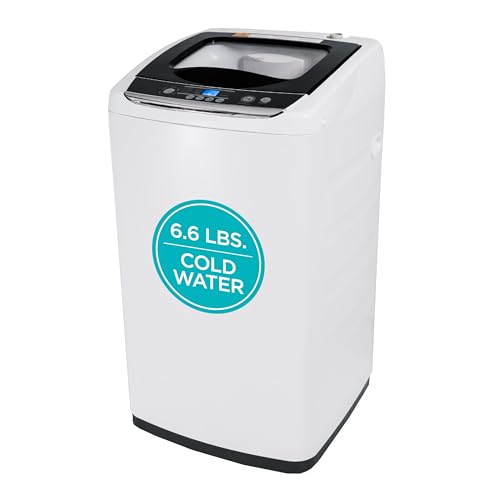
BLACK+DECKER 0.9 Cu. Ft. Portable Washer
Tub
0.9 cu. ft.
Cycles
5
Water
Cold only
Connection
Quick-connect sink adapter
The BLACK+DECKER is the small-load choice for apartments where storage matters more than maximum tub room. It offers Heavy, Gentle, Normal, Rapid, and Soak cycles, three water levels, a quick-connect sink adapter, and cold-water-only washing. The stainless-steel tub and top-load format are simple to use once the sink connection is sorted.
Its size limits bedding. Capacity and dimension signals conflict, so the safest role is a compact washer for clothing, pillowcases, towels, and divided sheet loads rather than a full bedding set. Transit damage has also been a problem, so a bent cabinet or exposed wiring should not go into service.
Why It Works
- Five cycles cover everyday and gentler laundry.
- Cold-water-only operation keeps the inlet setup simple.
- The included quick-connect adapter works with compatible faucets.
- The small tub is useful for one-person loads and limited closet space.
What To Keep In Mind
- Bedding may need to be split into several loads.
- Exact capacity and dimensions are inconsistent.
- Some faucet styles need a different adapter.
- Do not use a unit that arrives with cabinet or wiring damage.
3 / 4
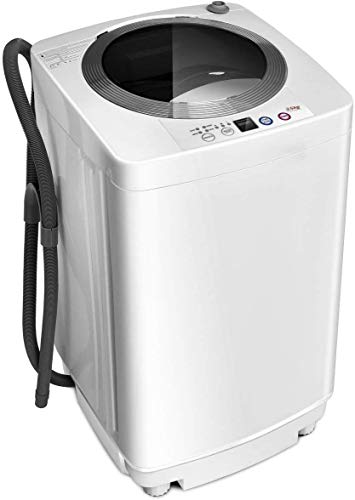
Giantex 8 lb Full Automatic Washer
Footprint
17 x 17 in
Water levels
3
Drainage
Built-in pump
Fill
Faucet or manual
This Giantex model has the smallest clear floor footprint here at about 17 inches square. It includes a built-in drain pump, three water levels, and manual-fill support, which is useful in a studio or older apartment where the faucet does not accept a portable-washer adapter. The 37.4-pound cabinet is also the lightest clearly listed machine in this group.
Rust staining is the reason it does not rank higher. A washer that leaves rust on white laundry creates a fabric-care problem, not just a cosmetic one. Leakage has also appeared early in use. The compact cabinet is appealing, but keep the first loads supervised and stop using it if the tub area begins marking clothes or water escapes onto the floor.
Why It Works
- A 17-inch-square footprint fits tighter bathrooms and kitchens.
- Manual filling can bypass an incompatible faucet.
- Three water levels help with genuinely small loads.
- The built-in drain pump gives more flexibility than gravity drainage.
What To Keep In Mind
- Rust staining is a serious reason to stop using the machine.
- Early leakage can damage apartment floors.
- Keep the drain hose secured during every cycle.
- Do not treat the small cabinet as a bedding-capacity machine.
4 / 4
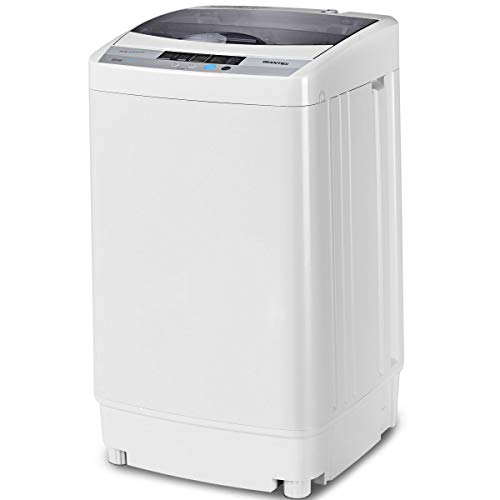
Giantex 1.34 Cu. Ft. Full-Automatic Washer
Tub
1.34 cu. ft.
Programs
10
Water levels
8
Display
LED
The 1.34-cubic-foot Giantex gives you ten programs, eight water levels, and an LED display in a roughly 20-inch footprint. That control range is useful if you regularly switch between small clothing loads, towels, and sheets and want to adjust water use rather than relying on one automatic level.
The capacity figures conflict, so the 1.34-cubic-foot tub is the more useful planning reference than any larger weight claim. Imbalanced laundry can cause severe vibration, and early wash failure has occurred. Long-term reports are mixed, ranging from early problems to years of service, which makes careful setup and realistic loading especially important.
Why It Works
- Ten programs give more flexibility than the simpler five-cycle models.
- Eight water levels help match water to load size.
- The clear lid makes it easy to see when sheets are bunching.
- The compact footprint fits many apartment laundry corners.
What To Keep In Mind
- Do not use the conflicting weight claims to judge load size.
- Rebalance long fabric if the washer starts shaking hard.
- Hose fittings may need extra apartment-specific hardware.
- Stop using the machine if the wash action fails or water leaks.
Apartment Setup Tips That Matter
Get building permission before connecting the washer. Even a quiet compact machine can violate a lease if portable appliances are prohibited. Ask about drainage too; a kitchen sink, bathtub, or standpipe may be treated differently by the building.
Place the washer on a firm, level floor and keep the drain end mechanically secure. Do not rely on the weight of the hose to keep it inside a sink. If the machine rolls for storage, disconnect the water first and drain the hose before moving it.
Run bedding in smaller loads than clothing. Separate towels from sheets when the combined load becomes dense, and use an extra spin only when the fabric can stay balanced. The goal is clean laundry without turning the spin cycle into a vibration test for your floor and neighbors.
Frequently Asked Questions
Are portable washing machines allowed in apartments?
It depends on the lease and building rules. Get permission before buying or connecting one, especially in an upper-floor unit.
Can a portable washer wash bed sheets?
Larger tubs can handle small sheet loads when the fabric has room to move. Small 0.9-cubic-foot machines may require separate pieces.
What if my faucet does not fit the washer adapter?
Some washers allow manual filling, while others need a different compatible adapter. Do not force a fitting that leaks.
How do I keep the drain hose from flooding the floor?
Route it without kinks and secure the outlet so vibration cannot pull it free. Stay nearby during early cycles until the setup is dependable.
Why does a portable washer shake during spin?
Long or uneven laundry can collect on one side of the tub. Pause the cycle, untangle the load, and redistribute the weight.
Is a bigger portable washer harder to store?
Usually. More tub room often means a taller or wider cabinet, plus more weight to move between a closet and the sink.
If your main loads are sheets and towels, the best compact washing machines for sheets and towels focus more closely on usable tub room. If you need an even smaller machine for occasional laundry, the best mini washers for apartments compare automatic, twin-tub, and collapsible formats. If your apartment has no dryer, the best drying racks for sheets and comforters can help you plan the drying side too.
