


As an affiliate, we may earn a commission from qualifying purchases. We get commissions for purchases made through links on this website from Amazon and other third parties.
Bedding needs more working room than ordinary clothing. A sheet can wrap around an agitator or itself, while a blanket gets heavy enough to stall circulation or throw a small spin tub off balance. That is why the best portable washer for bedding is not always the easiest machine to move.
Before bedding loads in portable washers, confirm material compatibility and avoid leaving excess moisture in thick fabric or padding.
The Auertech 28-pound twin tub is the best overall balance here. Its 18-pound wash side gives sheets and thin blankets useful room without taking the huge footprint of the 40-pound model, and the ten-pound spinner is large enough to keep transfer batches manageable. The larger Auertech twin tub is the capacity-first pick, while the Giantex automatic makes sense when convenience matters more than maximum bedding room.
When comparing twin-tub washers for blankets, prioritize relevant dimensions, durable construction, manageable care, and the intended role.
Best Overall
Best for Maximum Wash Room
Best Automatic Pick
Portable Bedding Washers at a Glance
| Pick | Format | Best fit | Main tradeoff |
|---|---|---|---|
| Auertech 28 lb | Twin tub | Sheets and thin blankets in moderate spaces | Manual transfers and pump reliability |
| Auertech 40 lb | Large twin tub | Maximum bedding wash room | Very wide cabinet and thinner customer support |
| Giantex Twin Tub | Compact twin tub | Tight spaces and lighter bedding | Gravity drainage and smaller spinner |
| Giantex Automatic | Full automatic | Less hands-on laundry | Smaller tub and conflicting load figures |
Tub Circulation Matters More Than a Big Headline Number
A washer can have a generous total capacity and still be poor for bedding if the fabric cannot turn through the water. Load sheets loosely and watch how they move. If the tub looks stuffed before the wash starts, remove part of the load.
Before choosing portable washing machines, compare materials, construction, dimensions, care, and the job the product must do.
Twin tubs also have two capacities to think about. The wash side is larger than the spinner, so one wash load may become two or three spin batches. That is normal. Trying to force the whole wet load into the smaller spinner can create vibration, slow water removal, or strain the motor.
Drainage changes the setup too. A pump can send water to a higher sink or tub edge, while gravity drainage needs a steady downward path. Do not lift or tilt a full washer on an unstable stand just to make the hose reach.
1 / 4
Auertech 28 lb Twin-Tub Washer
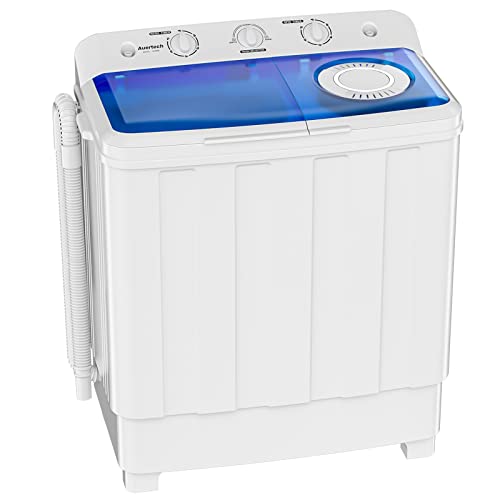
Wash tub
18 lb
Spin tub
10 lb
Weight
31 lb
Drainage
Pump
The 28-pound Auertech strikes the best balance for bedding because its 18-pound wash side gives sheets and thin blankets useful space, while the ten-pound spinner is large enough that transfer work stays reasonable. The cabinet is narrower than the largest Auertech, and the 31-pound machine weight makes it easier to move or store between laundry days.
Its drain pump is helpful when the hose cannot simply lie downhill into a bathtub. That pump is also the main ownership risk because failures have appeared after months of use. Keep the drain hose below the supported height, avoid kinks, and treat a slow or stalled drain as a machine problem rather than continuing to run spin cycles against trapped water.
Why It Works
- The 18-pound wash side gives sheets more circulation room than smaller twin tubs.
- A ten-pound spinner reduces the number of transfer batches.
- The 31-pound cabinet stays reasonably portable.
- Pump drainage offers more placement choices than gravity-only models.
What To Keep In Mind
- One full wash load may still need two spin batches.
- Drain-pump failure can stop the laundry workflow.
- Do not pack blankets so tightly that water cannot move around them.
- Sheets and towels may dry better when washed separately.
2 / 4
Auertech 40 lb Twin-Tub Washer

Wash tub
24 lb
Spin tub
16 lb
Width
34.5 in
Drainage
Pump
The large Auertech has the roomiest clearly separated twin-tub setup here, with a 24-pound wash side and 16-pound spinner. That smaller wash-to-spin gap is useful for bedding because fewer wet pieces have to sit waiting for a second spin batch. Heavy blankets have also been washed successfully when the tub is not overloaded.
The size is the drawback. At 34.5 inches wide, this is closer to a semi-permanent laundry appliance than a washer you casually tuck beside the sink. Product information around total capacity conflicts, and the customer record is thinner than ideal. Choose it for the clear 24-pound wash and 16-pound spin split, not for the largest headline number.
Why It Works
- A 24-pound wash side gives bulky bedding the most room in this group.
- The 16-pound spinner keeps the transfer mismatch relatively small.
- A drain pump helps with sinks or tubs above floor level.
- Timed wash and spin controls stay simple despite the larger machine.
What To Keep In Mind
- The 34.5-inch width needs significant floor space.
- Exact total capacity information is inconsistent.
- Large blankets still need enough water and empty space to circulate.
- A larger twin tub means more water to fill, rinse, and drain.
3 / 4
Giantex Compact Twin-Tub Washer
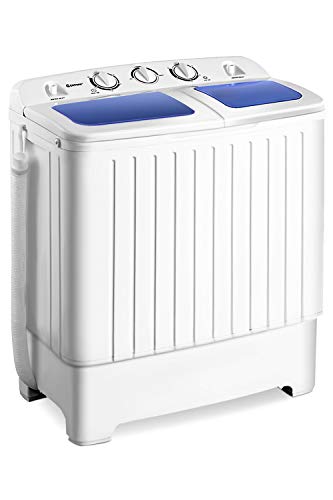
Wash tub
12 lb
Spin tub
8 lb
Weight
28 lb
Drainage
Gravity
The Giantex twin tub is the smallest manual option here, with a 12-pound wash side, eight-pound spinner, 28-pound machine weight, and a cabinet under 25 inches wide. It fits apartments, RVs, and bathrooms where the larger Auertech machines simply take too much room. Normal and soft wash settings add basic fabric control.
Gravity drainage is the compromise. The hose needs a clear downward route, and residual water can stay in the machine if the drain sits too high. Raising the washer on an unstable crate or tilting a full machine is not a good fix. Plan a sturdy, level location near a low tub or drain before buying.
Why It Works
- The compact width fits tighter laundry spaces.
- A 12-pound wash tub can handle smaller sheet or blanket loads.
- The eight-pound spinner is useful for splitting one wash load into manageable batches.
- At 28 pounds, the cabinet is easy to reposition when empty.
What To Keep In Mind
- Gravity drainage needs a reliable downward path.
- The spinner is smaller than the wash side.
- Exact total capacity and dimensions are inconsistent.
- Inspect hoses and filters for damage before regular use.
4 / 4
Giantex 1.34 Cu. Ft. Full-Automatic Washer
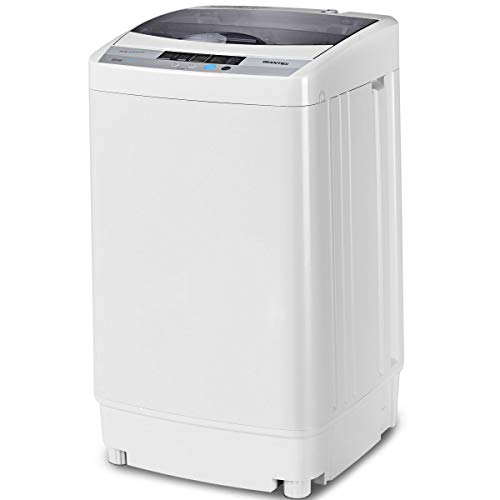
Tub
1.34 cu. ft.
Programs
10
Water levels
8
Drainage
Pump
The full-automatic Giantex removes the biggest twin-tub inconvenience: you do not have to move dripping bedding from a wash tub into a separate spinner. Ten programs and eight water levels add useful control, while the roughly 20-inch cabinet is easier to place than the large twin tubs.
That convenience costs bedding space. The 1.34-cubic-foot tub is the smallest practical wash area here, and larger weight claims conflict. Sheets can also create violent imbalance if they collect on one side during spin. Use the automatic machine for smaller bedding loads and split thick blankets rather than forcing them into the tub.
Why It Works
- Full automatic wash and spin removes manual transfer work.
- Ten programs provide more control than simple twin-tub timers.
- Eight water levels suit small and medium loads.
- Pump drainage works in more locations than a gravity hose.
What To Keep In Mind
- The smaller tub limits bulky bedding circulation.
- Ignore conflicting weight claims and judge the load by open tub space.
- Stop and rebalance sheets if spin becomes violent.
- Early wash failure is part of the ownership risk.
A Practical Bedding Workflow With a Portable Washer
Wash one bulky type at a time. Sheets can go together when they still move freely, but adding towels makes the load much denser after the towels absorb water. Thin blankets are easier than thick comforters, which may be too bulky even when their dry weight looks manageable.
With a twin tub, spin in smaller batches than you wash. Spread each spin batch evenly around the basket and use the cover plate when the machine requires it. After spinning, shake bedding open before placing it on a drying rack or in a portable dryer.
Drain the machine fully after the last rinse. A kinked hose or failed pump can leave dirty water inside the cabinet, while gravity systems may need the hose laid lower than the tub. Let the washer air out before storage.
Frequently Asked Questions
Can a portable washing machine wash blankets?
Thin blankets can work when they have enough room to circulate. Thick or heavy blankets may be too bulky for a portable tub even when the dry weight seems acceptable.
Are twin tubs better for bedding than automatic portable washers?
Twin tubs often give you more wash space for the footprint, but they require manual filling, rinsing, transfer, and spinning. Automatics are easier but may have smaller tubs.
Why is the spin tub smaller than the wash tub?
Twin tubs are designed around separate jobs. One wash load often needs to be divided into smaller spin batches so the basket can stay balanced.
Can sheets damage a portable washer?
Sheets can create severe imbalance when they wrap into one heavy bundle. Stop a shaking spin, untangle the fabric, and redistribute it.
Is pump drainage better than gravity drainage?
A pump gives more placement flexibility. Gravity drainage is simpler but needs the hose to run steadily downhill to a low drain.
Do portable washers fully dry bedding?
No. The spin cycle removes water, but bedding still needs a drying rack, portable dryer, or another care-label-safe drying method.
If sheets and towels make up most of your loads, compare the best compact washing machines for sheets and towels for more automatic options. If floor space is your main apartment constraint, the best portable washing machines for apartments focus on faucet fit, storage, and leaks. Once the load is spun, the best drying racks for sheets and comforters can help you finish bulky laundry with better airflow.
