

As an affiliate, we may earn a commission from qualifying purchases. We get commissions for purchases made through links on this website from Amazon and other third parties.
Blankets turn a small depilling job into a test of coverage, endurance, and patience. A fabric shaver that feels quick on a sweater may need repeated bin emptying or battery changes on a bedspread. At the same time, the fastest motor is not useful if the head catches a fold or seam.
Evaluating fabric shaver value means weighing performance, durability, maintenance, limitations, and total cost rather than one headline feature.
These five picks balance speed with control. Keep the blanket flat, work in small sections, start with the gentlest setting, and use light pressure. If the fabric is loose, open-knit, fringed, embroidered, or already thinning, skip the shaver until you know the surface can handle it.
When comparing fabric-shaver alternatives, prioritize relevant dimensions, durable construction, manageable care, and the intended role.
Best Overall
Best for Broad Battery-Powered Passes
Best Rechargeable Pick
Quick Comparison
| Pick | Power | Blanket advantage | Main tradeoff |
|---|---|---|---|
| BEAUTURAL | 2 AA batteries | Two speeds, three heights, spare blades | Too much pressure can nick fabric |
| Philips | 2 AA batteries included | Large surface and 8800 RPM | Bin may need frequent emptying |
| Magictec | Rechargeable | 65 mm mesh and 60-minute runtime | Pressing hard can grab intact fabric |
| Conair | 2 AA batteries | Two-inch head and three depths | Motor and battery-cover durability concerns |
| Gleener | Manual | Three edges plus lint brush | Slow for a whole blanket |
The 5 Best Fabric Shavers for Blankets and Bedding
1 / 5
BEAUTURAL Fabric Shaver
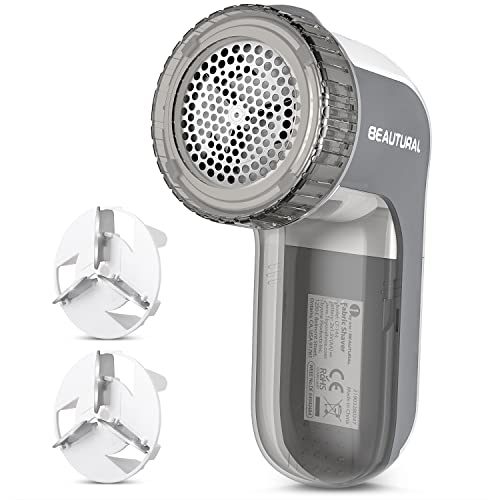
Power
2 AA batteries
Speed
Up to 9000 RPM
Control
2 speeds and 3 shaving heights
Extras
2 replacement blades
BEAUTURAL is the strongest overall blanket pick because it pairs useful motor speed with real adjustment. It has two speeds, three shaving heights, three foil-hole sizes, and two spare blades. Blankets and bed sheets are directly included among its intended uses.
When comparing fabric shaver use, prioritize relevant dimensions, durable construction, manageable care, and the intended role.
That combination lets you begin with more clearance on a thicker or unfamiliar blanket rather than placing the blade as close as possible on the first pass. The main risk is technique: heavy pressure can nick fabric. Keep the surface taut and let the shaver skim raised pills instead of pushing down into the weave.
Why It Works
- Adjustable height helps when blanket textures vary.
- Replaceable blades make sense for repeated large-surface work.
- Up to 9000 RPM gives faster coverage than a manual depiller.
What To Keep In Mind
- It requires AA batteries.
- Too much pressure can damage the blanket.
- It is not designed to remove loose pet hair.
2 / 5
Philips Fabric Shaver GC026/00

Power
2 AA batteries included
Speed
8800 RPM
Foil
3 hole sizes
Control
Height adjustment cap
Philips favors simple, broad passes. Its large shaving surface covers more fabric at once, the blade reaches 8800 RPM, and the foil uses three hole sizes to catch different pill sizes. The height-adjustment cap gives you a safer first setting when you move from a sturdy fleece throw to a finer surface.
The removable pill container is easy to empty, which matters because a blanket can fill a small chamber quickly. Stop whenever cutting slows and clear the collected fibers instead of forcing another pass. This pick is especially practical if you prefer replaceable batteries and want to start immediately with the included pair.
Why It Works
- Broad shaving surface reduces repetitive strokes.
- Three mesh-hole sizes handle mixed pill sizes.
- The height cap gives extra clearance when needed.
What To Keep In Mind
- Expect more bin-emptying on heavily pilled blankets.
- Long-term life varies with use and maintenance.
- Fresh batteries do not replace careful pressure control.
3 / 5
Magictec Rechargeable Fabric Shaver
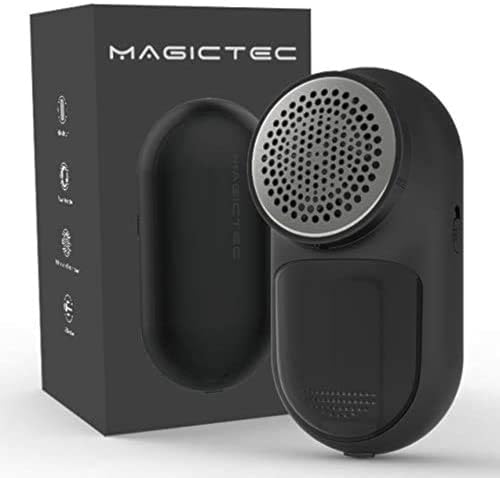
Power
Rechargeable
Mesh
65 mm
Charge time
2 hours
Runtime
Supported 60 minutes
Magictec is the convenient rechargeable option for people who do not want to keep AA batteries nearby. Its 65 mm mesh gives useful surface coverage, and a two-hour charge supports around 60 minutes of operation. That is enough for a focused blanket session without a cord running across the bed.
Use that runtime with a light hand. Customer experiences show that pressing down can make the tool catch more than the raised pills. The better technique is to flatten the blanket, glide the head, empty the lint chamber when needed, and repeat only where fuzz remains.
Why It Works
- Rechargeable operation is convenient for longer cordless sessions.
- The 65 mm head suits broader textile surfaces.
- A supported 60-minute runtime reduces charging stops.
What To Keep In Mind
- Heavy pressure raises the risk of grabbing intact fabric.
- Clean the chamber and head during long jobs.
- Do not rely on aggressive passes to finish faster.
4 / 5
Conair Fabric Shaver and Lint Remover

Power
2 AA batteries
Head
2 inches
Control
3 depth settings
Cleanup
Detachable lint catcher
Conair gives you a two-inch head and three depth settings in a compact battery-powered tool. The depth control is useful when a blanket has a thicker pile than a sheet or pillowcase, and the removable lint catcher is easy to empty as you move across sections.
The drawback is ownership durability. Battery-cover breakage and motors stopping early appear in customer experiences, including one blanket job that outlasted the motor. That makes Conair better for occasional depilling than for someone who plans to restore large blankets frequently.
Why It Works
- Three depths help you start farther away from the surface.
- A two-inch head gives reasonable coverage.
- Cordless operation is simple around a large bed.
What To Keep In Mind
- Two AA batteries are required and not included.
- Battery-door and motor life are the key weak points.
- Clean the blade area and plan for battery changes on bigger jobs.
5 / 5
Gleener 4-in-1 Fabric Shaver & Lint Brush
Power
Manual
Edges
3 interchangeable fabric edges
Extra tool
Integrated lint brush
Best for
Small controlled areas
Gleener replaces a spinning blade with three manual depilling edges and an integrated lint brush. That makes it useful when you want hands-on control for a small patch, a pillow sham, or a blanket section where an electric head feels too aggressive. The brush can also finish by lifting lint or pet hair after the pills are removed.
The limitation is scale. Manual passes take time, and a full blanket can become tiring. The tool also is not risk-free: the wrong edge or too much rubbing can fuzz or pull some fabrics. Test first and stop if the surface starts looking rougher instead of smoother.
Why It Works
- No batteries, charging, or motor maintenance.
- Three edges give different levels of manual contact.
- The lint brush adds a second cleanup function.
What To Keep In Mind
- It is the slowest choice for full-blanket work.
- Some fabrics can pull or fuzz under a manual edge.
- Use short controlled strokes and inspect the surface often.
A Safer Blanket-Shaving Routine
Identify the surface before you start
Tightly woven or sturdy pilled fabric is easier to shave than loose open knits, tassels, fringe, loops, embroidery, or already-thin areas. A fabric shaver removes raised fibers; it cannot repair fabric that is structurally worn.
Work section by section
Spread the blanket over a flat bed or table and isolate a small area. Pull it taut with one hand while keeping fingers away from the cutting head. Finish that section before moving the blanket so folds do not creep under the foil.
Use light pressure
A slow result often means the blade needs cleaning, the bin is full, or the setting is too high. Pressing harder is the risky shortcut. Clear the tool first, then make another gentle pass.
Stop at seams and details
Lift the shaver before reaching piping, stitched labels, hems, loose threads, fringe, or decorative texture. Reposition on the other side instead of running straight across a raised edge.
Clean the tool before storage
Empty the lint bin, brush away fibers around the foil and blades, and store spare blades or manual edges where they will stay dry and protected. A clean cutting surface is less likely to drag on the next blanket.
Frequently Asked Questions
What is the best fabric shaver for blankets?
BEAUTURAL is the best overall choice here because it combines two speeds, three shaving heights, and replaceable blades with direct blanket support. Philips is a strong alternative when you want a broad battery-powered head.
How long does it take to shave a blanket?
It depends on blanket size, pill density, head width, and how often you stop to empty the bin. A lightly pilled throw may be quick, while a large heavily pilled blanket can require a careful section-by-section session.
Can I use a fabric shaver on fleece?
Some shavers and manual depillers support fleece, but fleece varies. Test a hidden spot, keep the fabric flat, and use the gentlest effective setting before treating a visible area.
Should I stretch a blanket while shaving it?
Keep the section flat and gently taut so folds cannot rise into the head. Do not stretch the fabric so hard that you distort the weave or knit.
Is a manual depiller better for delicate blankets?
A manual tool can give you more direct control, but it can still pull fibers. Delicate, loose, decorated, or open-knit blankets may be better left unshaved unless the care guidance supports depilling.
What should I do if the shaver stops cutting well?
Turn it off, empty the lint chamber, clean fibers from the foil and blade area, and inspect the blade. Replace batteries, recharge, or change a worn replaceable blade before trying more pressure.
Before you touch a favorite blanket, read how fabric shavers help with pilling to separate removable pills from actual fabric wear. If you are unsure whether an electric model is worth using, how electric lint removers work covers their strengths and limits. For delicate or damaged surfaces, whether a fabric shaver actually works explains when shaving can make things worse.
