

As an affiliate, we may earn a commission from qualifying purchases. We get commissions for purchases made through links on this website from Amazon and other third parties.
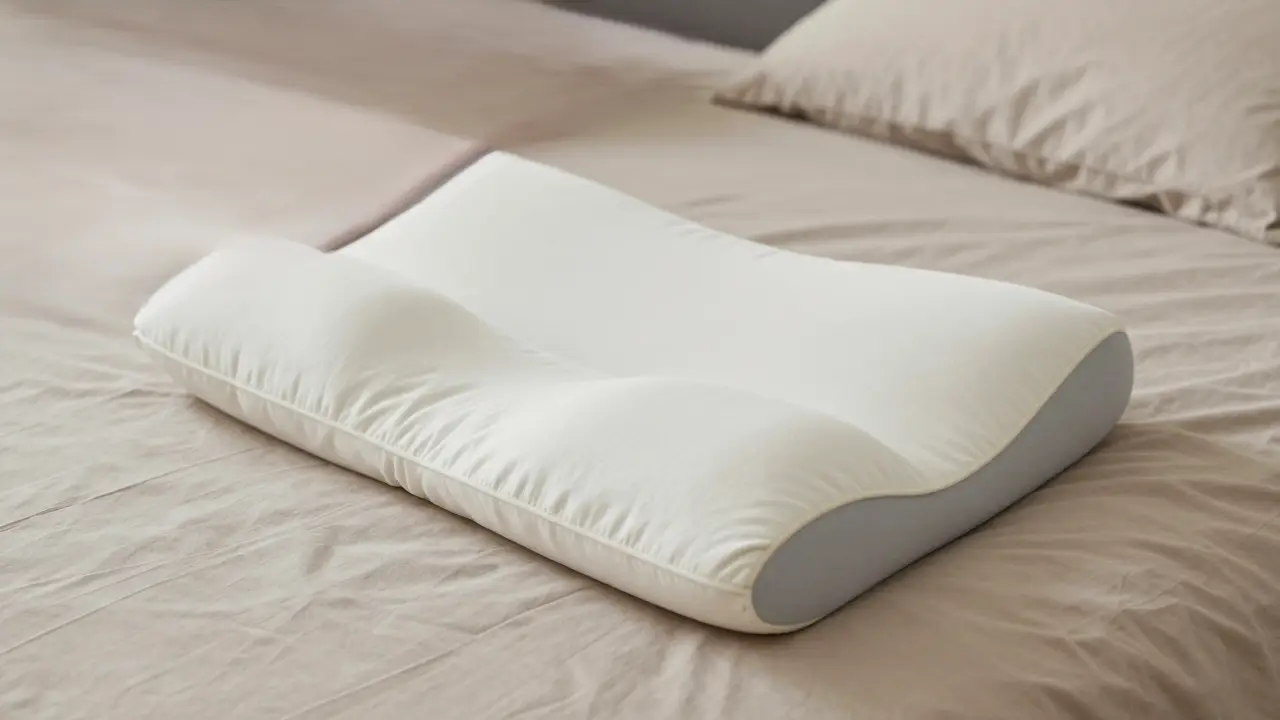
A cervical pillow is a geometry purchase before it is a material purchase. The neck roll, head cradle, shoulder clearance, and height have to match your body closely enough that the contour feels supportive instead of forcing you into an awkward position.
The six pillows here use several adjustment methods: removable center inserts, removable foam layers, reversible high/low contours, and arm grooves for side sleepers. None of those designs is automatically better. The useful question is which one gives you the best chance of matching your neck length, shoulder width, sleep position, and preferred firmness.
These pillows are comfort products, not medical treatment. Persistent or severe neck symptoms warrant appropriate professional evaluation rather than relying on a pillow alone.
Best Overall
Best Queen Contour
Best Arm-Groove Design
Cervical Pillows at a Glance
| Pick | Height system | Shape | Main tradeoff |
|---|---|---|---|
| ZAMAT | Removable ~0.8-in insert + rotation | Adjustable contour | Firmness and neck-section length can still miss |
| EPABO Queen | Removable center piece | Wide queen contour | Large footprint on smaller beds |
| DONAMA | Two heights | Contour with arm grooves | Side-sleep fit stronger than stomach-sleep fit |
| Royal Therapy | Removable middle foam layer | Three-layer contour | Some sleepers still want more total height |
| Elviros | Reversible high/low contour | Queen shape with side cutouts | Can feel hot or very firm during break-in |
| HOMCA | 3.2-in / 5-in reversible sides | Narrow wave contour | No fine adjustment between the two heights |
Our Top Picks
1 / 6
ZAMAT Adjustable Cervical Pillow
Core
Memory foam
Adjustment
Removable ~0.8-in insert
Size
21 x 14 x 4.7 in
Orientation
Rotatable high/low
Cover
Removable washable
ZAMAT ranks first because it offers more ways to correct a near-miss fit than the fixed contours in this group. A removable memory-foam insert changes the center height by roughly 0.8 inch, and rotating the pillow presents a different profile for sleepers who need less or more elevation.
That flexibility matters with cervical pillows because the difference between supportive and awkward can be small. If the high side lifts your head too much but the low side feels too shallow, removing the insert gives you another variable to test rather than forcing you to replace the pillow immediately.
Adjustment does not solve everything. Some sleepers find the neck section too long for their body, and others say removing the center insert does not change the feel as much as expected because the surrounding foam remains firm. Memory-foam odor can also linger for sensitive users. Even so, the combination of insert adjustment and reversible orientation gives this model the best fit flexibility.
Why it works
- Removable insert changes the center profile.
- Rotating the pillow provides another height option.
- Contoured shape supports both head cradle and neck roll.
- Removable cover makes routine washing easier.
What to keep in mind
- Neck-section length still has to match your body.
- Firm foam can make small height changes feel less dramatic.
- Air the pillow before use if you are sensitive to foam odor.
2 / 6
EPABO Cervical Memory Foam Pillow
Core
Memory foam
Size
24 x 15 x 4.8 in
Adjustment
Removable center piece
Shape
Queen contour
Core care
Do not wash
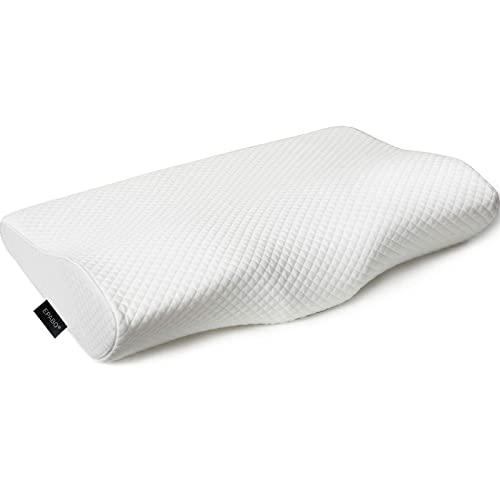
EPABO is the broadest conventional queen contour in the group and includes a removable center piece that lets the head sit lower. That is a practical adjustment for sleepers who like the surrounding neck support but find the center cradle too high.
Customer evidence is encouraging on that insert as a genuine fit tool rather than a decorative feature. Long-term users also report good service life from the foam and cover. The larger footprint can be inconvenient on a small bed, though, and a wide pillow is not automatically a better match for a shorter neck or narrow shoulders.
Why it works
- Removable center piece gives a lower-head option.
- Queen footprint provides more lateral room for position changes.
- Contoured foam holds a more defined shape than loose fill.
- Outer cover can be washed while the foam core stays dry.
What to keep in mind
- The 24-by-15-inch footprint can feel oversized on a compact bed.
- Do not machine wash the foam core.
- A broad contour still needs to match your neck length and shoulder position.
3 / 6
DONAMA Cervical Pillow

Core
Polyurethane foam
Shape
Dual-height contour with arm grooves
Size
Queen
Best fit
Side/back
Cover
Breathable
DONAMA is the most side-sleeper-oriented contour here because it adds dedicated arm grooves instead of relying only on a raised neck wave. The two-height design gives you a choice of elevation, while the arm spaces can make it easier to position the upper shoulder and hand when lying on your side.
That geometry is useful for sleepers who constantly tuck an arm under a normal pillow. Customer evidence is strongest for side sleeping and keeping the head in a steadier position; stomach-sleep feedback is less convincing. Firmness is also polarizing, ranging from too flexible to too hard.
Why it works
- Arm grooves create a specific side-sleeping position.
- Two height choices broaden fit across sleepers.
- Wide cradle gives room for some nighttime movement.
- Breathable cover handles the contact surface.
What to keep in mind
- The shape is more convincing for side/back sleeping than stomach sleeping.
- Firmness impressions vary widely.
- A structured pillow can restrict sleepers who move constantly.
4 / 6
Royal Therapy Memory Foam Pillow

Core
Memory foam
Size
24 x 14 x 5 in
Adjustment
Removable middle layer
Construction
Three foam layers
Cover
Washable rayon-derived-from-bamboo
Royal Therapy uses a three-layer construction rather than a small center insert. Removing the middle foam layer lowers the entire contour, which makes the adjustment easier to understand and reproduce.
That two-level setup is useful if you want meaningful height change without handling loose fill. Customer notes support the customization process and the neck support once the correct configuration is found. One limitation is that sleepers who need an unusually tall profile may still want more foam than the full three-layer setup provides.
Why it works
- Removable middle layer changes the whole contour height.
- Adjustment is clean and easy to repeat.
- Queen-size footprint works for side and back movement.
- Washable outer cover simplifies care.
What to keep in mind
- Only two practical height configurations rather than fine adjustment.
- Full height may still be insufficient for very broad shoulders.
- Foam feel remains fixed even when the height changes.
5 / 6
Elviros Cervical Memory Foam Pillow

Core
Memory foam
Size
Queen
Heights
Two contour sides
Features
Side arm cutouts
Cover
Removable
Elviros combines a broad queen footprint with two contour heights and side cutouts for the upper arm. It is a good option for sleepers who know they like a structured ergonomic shape and want to choose between a higher and lower neck position without removing components.
Break-in is the biggest ownership issue. Some users find the foam comfortable after several weeks but hard at first, while others continue to find it too firm or warm. The product's changing versions also make expectations about exact firmness less certain.
Why it works
- Two heights let you test a higher and lower contour.
- Side cutouts accommodate the upper arm during side sleeping.
- Queen footprint provides a broader head cradle.
- Removable cover handles routine cleaning.
What to keep in mind
- Foam may require a substantial break-in period.
- Heat buildup is a recurring complaint.
- If both contour heights miss your neck, there is no insert for an in-between setting.
6 / 6
HOMCA Cervical Pillow

Core
Memory foam
Size
24 x 12 in
Heights
3.2 in / 5 in
Angle
15-degree stated contour
Cover
Removable double layer
HOMCA has the clearest two-height split: one side is stated at 3.2 inches and the other at 5 inches. That large difference is useful if you want to test low versus high support without removable pieces.
The tradeoff is the gap between those two options. If 3.2 inches is too low and 5 inches is too high, there is no middle setting. Some users also report initial firmness that softens with use, while a minority have experienced poor expansion after unpacking.
Why it works
- Large high/low difference makes the two configurations easy to distinguish.
- No removable parts to lose or reinstall.
- Narrow footprint takes less bed space.
- Removable outer cover supports regular washing.
What to keep in mind
- No fine adjustment between 3.2 and 5 inches.
- Give compressed foam time to expand before judging fit.
- Initial firmness may change during break-in.
How to Choose a Cervical Pillow
Measure the contour against your body, not the product name
A pillow labeled "orthopedic" or "cervical" can still be the wrong height. Your neck length, shoulder width, head size, mattress firmness, and sleep position determine whether the cradle actually fits.
Decide how much adjustment you need
If you routinely fall between pillow heights, ZAMAT's removable insert or Royal Therapy's layer system gives you more options. If you already know you like a high or low wave, a reversible contour can be simpler.
Side sleepers should look beyond the neck roll
The shoulder and upper arm also need somewhere to go. DONAMA and Elviros add arm grooves or cutouts that may feel more natural than a plain wave contour for dedicated side sleepers.
Expect a trial period with firm foam
Contoured memory foam can feel unusually rigid compared with a fiber pillow. Some models soften with use. Give the foam its proper expansion time and assess whether the contour itself fits before assuming firmness alone is the problem.
Pay attention to persistent odor or poor expansion
An initial foam smell can fade with ventilation. A pillow that remains strongly odorous or fails to recover its intended shape after the recommended period is a different issue and may not be a good unit to keep.
Frequently Asked Questions
What is a cervical pillow?
A cervical pillow uses a shaped head cradle and neck-support area rather than a uniformly flat surface. The goal is to provide more defined positioning, but comfort depends on matching the contour to the sleeper.
Are cervical pillows good for side sleepers?
They can be, especially when the contour has enough height to fill the shoulder-to-head gap. Designs with arm or shoulder cutouts may be easier for dedicated side sleepers to position.
How do I know which side of a cervical pillow to use?
Start with the side that most closely matches your usual pillow height. Your head should not feel pushed upward or dropped too low. Follow the specific pillow's orientation instructions because contour shapes differ.
Do cervical pillows take time to get used to?
Often, yes. A structured contour feels different from a fluffy pillow, and compressed foam may also need time to expand. Persistent discomfort, however, is a sign to reassess the height or shape rather than forcing adaptation indefinitely.
Can I wash a cervical memory-foam pillow?
Usually the removable cover can be washed, while the foam core should stay out of a normal washer and dryer unless the manufacturer explicitly says otherwise.
For a less structured option, compare the best adjustable pillows and the broader best bed pillows.
