

As an affiliate, we may earn a commission from qualifying purchases. We get commissions for purchases made through links on this website from Amazon and other third parties.
The best bedding for allergy sufferers is not simply whatever has the strongest “hypoallergenic” wording. A more useful comparison is what the product actually covers, how completely it closes, how the fabric barrier is described, and whether the size matches your mattress or pillow.
An encasement and fitted protector serve overlapping but different roles, so using both depends on the barrier and laundry routine required.
For a mattress, a six-sided zippered encasement gives more complete coverage than a fitted protector that leaves the underside open. For pillows, a zippered protector adds an enclosed washable layer beneath the normal pillowcase. None of these products can guarantee symptom relief, so the picks below are ranked by construction, fit, and upkeep rather than medical promises.
Mattress vacuuming can remove loose surface debris, but it does not replace laundering, encasement, or appropriate allergy care.
Best Overall
Best Cotton Encasement
Best for Pillows
Best Bedding for Allergy Sufferers at a Glance
| Product | Protection zone | Key evidence | Best fit | Main tradeoff |
|---|---|---|---|---|
| Mission: Allergy Premium Microfiber Encasing | Six-sided mattress | Stated 2-micron mean pore size, membrane-free microfiber | Queen, 60 x 80 x 12 in | Some owners find it warm or stiff |
| National Allergy Cotton Encasement | Six-sided mattress | Tight cotton weave, locking zipper | Queen mattresses 6–9 in deep | Depth range is less forgiving |
| AllerEase Pillow Protectors | Zippered pillows | Under-10-micron fabric claim, washable two-pack | Standard/Queen pillows | Zipper quality should be checked |
| SafeRest Queen Mattress Protector | Fitted top-and-side layer | Cotton-blend terry over polyurethane laminate | Queen mattress needing easy removal | Not full enclosure; liquid feedback is mixed |
Our Four Picks
1 / 4
Mission: Allergy Premium Microfiber Mattress Encasing
Coverage
Six-sided mattress encasement
Size
Queen 60 x 80 x 12 in
Fabric
Microfiber polyester
Barrier evidence
Stated 2-micron mean pore size
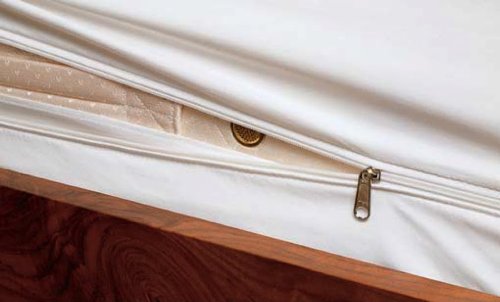
Mission: Allergy is the strongest overall pick here when you have a 12-inch-deep Queen mattress and want complete enclosure rather than a fitted top layer. Its premium microfiber polyester is membrane-free, air permeable, and tightly woven with a stated mean pore size of 2 microns.
That combination gives it a more concrete construction story than a generic allergy-protection label. The mattress is surrounded rather than merely covered from above, so the main buying question becomes fit: a 12-inch encasement should be matched to a mattress close to that depth rather than stretched over a much thicker bed.
Owner feedback is not uniformly positive. Some people describe the cover as soft and unobtrusive, while others report a warmer or stiffer feel after washing. That makes it a better choice for shoppers prioritizing enclosure evidence over the lightest possible sleep surface.
Why It Works
- Full encasement covers the mattress on all six sides.
- The product discloses a 2-micron mean pore size rather than relying only on broad marketing language.
- Membrane-free microfiber avoids a conventional laminated waterproof layer.
What To Keep In Mind
- The selected Queen model is specifically 60 by 80 by 12 inches.
- It is water repellent, not a substitute for a dedicated waterproof accident layer.
- Comfort can vary; some owners report warmth or stiffness.
2 / 4
National Allergy Cotton Queen Mattress Encasement

Coverage
Six-sided mattress encasement
Size
Queen
Depth
6 to 9 in
Fabric
100% cotton
Closure
Locking zipper
National Allergy is the better fit for buyers who want a cotton encasement and have a shallower Queen mattress. The selected model is specified for mattresses 6 to 9 inches deep and uses a tightly woven cotton construction with a locking zipper.
The product evidence describes a 2.6-micron weave and emphasizes breathability without a laminated coating. That makes the construction meaningfully different from a plastic-feeling spill protector. The tradeoff is sizing: a mattress that is materially deeper than 9 inches is outside the stated fit range, even if isolated customer comments describe stretching it farther.
Customer feedback is generally favorable on softness, quietness, and secure fit, but there are also reports of zipper problems. Because a zippered encasement depends on an intact closure, inspect the zipper before committing to regular use.
Why It Works
- Six-sided coverage surrounds the mattress rather than leaving the underside exposed.
- Cotton construction suits shoppers who prefer a natural-fiber sleep surface.
- The locking zipper supports the full-enclosure design.
What To Keep In Mind
- Follow the stated 6- to 9-inch depth range rather than assuming extra stretch.
- A damaged zipper compromises the usefulness of any full encasement.
- This is an allergen-focused barrier, not a guaranteed medical treatment.
3 / 4
AllerEase Standard/Queen Pillow Protectors

Protection zone
Pillows
Size
Standard/Queen
Quantity
2
Material
Polyester
Closure
Zippered
Mattress protection is only one part of the bed. AllerEase supplies two zippered Standard/Queen pillow protectors, making it the most useful pick here when your first priority is adding a removable barrier around the pillows used every night.
The product states that its fabric uses pore sizes smaller than 10 microns and positions the covers as moisture wicking and washable. They are meant to go directly over the pillow, with the ordinary pillowcase layered on top.
The biggest practical weakness is the zipper. Most of the useful owner feedback describes a comfortable fit and quiet fabric, but there are reports of individual zippers arriving broken or failing to move smoothly. Test both before the return window closes.
Why It Works
- Two-pack covers a typical pair of Standard/Queen pillows.
- Zippered construction encloses the open end left exposed by a regular pillowcase.
- Warm-machine-wash care makes routine laundering straightforward.
What To Keep In Mind
- These are not supported as waterproof protectors.
- Oversized or unusually thick pillows may need a different size.
- Check both zippers before regular use.
4 / 4
SafeRest Queen Fitted Mattress Protector
Protection zone
Mattress top and sides
Size
Queen
Surface
80% cotton, 20% polyester terry
Backing
Polyurethane laminate
Style
Fitted protector
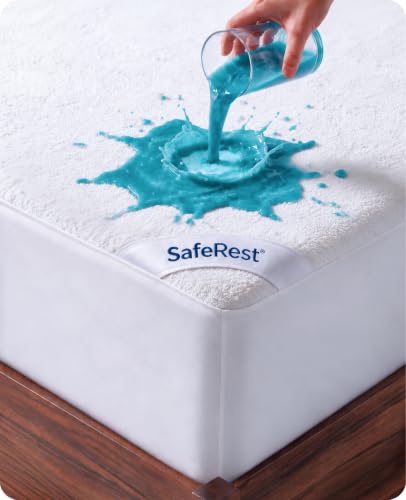
SafeRest ranks fourth because it solves a different problem. Instead of surrounding the mattress, it installs like a fitted sheet and leaves the underside open. That makes it easier to remove for laundry, but less complete as an enclosure.
Its sleep surface uses 80% cotton and 20% polyester terry over a polyurethane laminate. The product is marketed as waterproof, yet customer evidence is materially inconsistent: some users report successful spill protection while others describe liquid reaching the mattress.
For that reason, treat it as a convenient washable top layer rather than the most dependable choice when complete enclosure or high-stakes liquid protection is the priority. Inspect the laminate after washing and replace the protector if the backing separates or becomes damaged.
Why It Works
- Fitted-sheet installation is simpler than lifting a mattress into an encasement.
- Terry surface is more bedding-like than an exposed plastic sheet.
- Machine-washable construction is useful for frequent turnover.
What To Keep In Mind
- It does not surround the bottom of the mattress.
- Liquid-protection feedback is inconsistent despite the waterproof claim.
- Bleach and excessive heat can damage some laminated protectors; follow the product care instructions.
How to Build an Allergy-Conscious Bedding Setup
Start with the protection zone
Decide whether you are trying to cover the mattress, pillows, or both. A mattress encasement and pillow protector are not substitutes for one another. If the concern is concentrated around pillows, start there. If the mattress is the main focus, compare full enclosure against a simpler fitted layer.
Measure mattress depth before buying
Queen width and length are not enough. The National Allergy model here is specified for 6- to 9-inch mattresses, while the Mission: Allergy model is built around a 12-inch Queen. Forcing the wrong depth can create loose folds or put extra strain on the zipper.
Treat zipper integrity as part of the barrier
A zippered protector is only fully enclosed when the zipper and seams remain intact. Open and close the zipper during initial inspection, and check it again after laundering. Replace an encasement if the closure no longer seals properly.
Keep washable outer bedding in the routine
Protectors do not replace sheets and pillowcases. Use regular washable bedding over them and follow each product’s care label. Our guide to what kills dust mites immediately explains why heat and washing instructions matter, while what laundry detergent kills dust mites separates detergent claims from the larger cleaning routine.
Frequently Asked Questions
What type of bedding is best for allergy sufferers?
For protection products, look for clear construction evidence: full enclosure where needed, a reliable zipper, correct sizing, washable fabric, and disclosed weave or pore information when available. “Hypoallergenic” by itself does not guarantee a personal health outcome.
Is a mattress encasement better than a fitted protector?
A six-sided encasement provides more complete coverage because it surrounds the mattress. A fitted protector is easier to remove and wash but leaves the bottom open. Choose based on the protection zone and maintenance routine you actually need.
Should pillows also use zippered protectors?
They can be useful when you want a washable enclosed layer around the pillow beneath the normal pillowcase. Make sure the protector fits without heavily compressing the pillow and that the zipper closes correctly.
Does allergy-friendly bedding need to be waterproof?
No. Particle-barrier construction and liquid protection are separate features. A waterproof layer can help with spills, but it may also change heat, feel, noise, and laundering requirements.
Can hypoallergenic bedding stop allergy symptoms?
No product can promise that for an individual. Bedding protectors can change how mattresses and pillows are enclosed and cleaned, but persistent symptoms should be discussed with a qualified healthcare professional.
How often should mattress and pillow protectors be washed?
Follow the care label for the exact product. Wash sooner after visible soil or spills, and inspect zippers, seams, elastic, and laminated backing during laundry so damaged protection layers can be replaced.
Compare four hypoallergenic bedding protectors by enclosure style, fabric, fit, zipper design, and wash care. Learn the first signs associated with dust-mite exposure and why symptoms alone do not prove the cause. For pet households, compare six bedding picks for pet owners by liquid protection, hair cleanup, durability, and laundry turnover.
