

As an affiliate, we may earn a commission from qualifying purchases. We get commissions for purchases made through links on this website from Amazon and other third parties.
“Hypoallergenic” does not mean a bedding protector will prevent allergy symptoms for every person. A more useful comparison looks at the barrier itself: what it fully encloses, how tightly the fabric is constructed, whether the zipper closes securely, and whether the protector fits without stretching or bunching.
A well-fitted mattress encasement needs the correct depth, a secure zipper closure, and fabric that can tolerate routine washing.
These four picks include two Queen mattress encasements and two pillow protectors. Measure mattress depth and pillow size first. A tightly woven cover with a broken zipper or poor fit cannot do its job as intended.
Best Overall
Best for a 12-Inch Queen Mattress
Best Single Pillow Encasement
Quick Comparison
| Pick | Covers | Barrier detail | Best fit |
|---|---|---|---|
| National Allergy Cotton Encasement | Queen mattress | Tight cotton weave, six-sided zipper | Queen mattresses about 6–9 in deep |
| Mission: Allergy Premium Microfiber | Queen mattress | Mean pore size stated at 2 microns | 60 x 80 x 12-in Queen mattresses |
| Mission: Allergy Barrier II | Pillow | Mean pore size stated at 6 microns | Standard-size pillow enclosure |
| AllerEase 2-Pack | Pillows | Fabric pore size stated below 10 microns | Standard/Queen pillows needing two covers |
The 4 Best Hypoallergenic Bedding Protectors
1 / 4
National Allergy Cotton Queen Mattress Encasement

Size
Queen
Mattress depth
6-9 in
Material
Cotton
Coverage
6-sided encasement
Closure
Locking zipper
National Allergy is the strongest all-around mattress option because it combines full six-sided enclosure with a tightly woven cotton surface and a locking zipper. The Queen version is intended for mattresses roughly 6 to 9 inches deep, so it is best for a lower-profile mattress rather than a thick pillow top.
The membrane-free cotton avoids the stiff plastic feel of some protective covers and allows more airflow. The tight weave is the important feature here, not a promise that an individual sleeper's symptoms will change. A new cover may have an odor before washing, and the zipper deserves inspection as soon as the package is opened because a failed closure defeats a full encasement.
Why It Works
- Fully surrounds the mattress instead of covering only the top and sides.
- Tight cotton weave provides a physical barrier without a laminated membrane.
- Locking zipper helps keep the enclosure closed after installation.
What To Keep In Mind
- The 6- to 9-inch depth range is too shallow for many pillow-top mattresses.
- Wash before first use if the new fabric has a noticeable odor.
- Check the zipper before laundering or putting the mattress back on the bed.
2 / 4
Mission: Allergy Premium Microfiber Queen Mattress Encasing
Size
Queen
Dimensions
60 x 80 x 12 in
Material
Microfiber polyester
Mean pore size
2 microns
Construction
Membrane-free
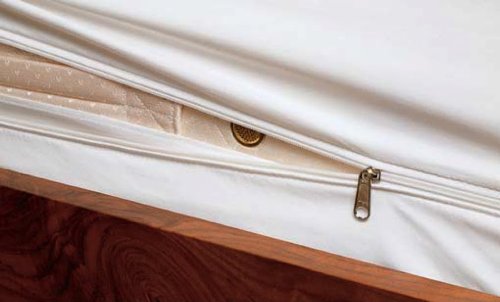
Mission: Allergy Premium Microfiber is the better fit when the Queen mattress is around 12 inches deep. The enclosure measures 60 by 80 by 12 inches and uses tightly woven microfiber without a solid membrane. Its stated mean pore size is 2 microns, and the barrier construction has third-party testing behind its dust-mite and animal-dander containment claims.
The microfiber is air- and water-vapor-permeable, which aims to reduce the hot, plasticky feel associated with some membrane covers. Comfort still varies: the fabric can feel warm or stiff to some sleepers, especially before it has been washed. Static after drying is another practical nuisance rather than a barrier failure.
Why It Works
- Exact 60-by-80-by-12-inch Queen sizing is easy to match.
- Disclosed 2-micron mean pore size gives a concrete barrier specification.
- Membrane-free construction allows airflow through the fabric.
What To Keep In Mind
- Twelve-inch depth should match the mattress closely rather than being forced over a much thicker bed.
- Microfiber can build static after drying.
- Barrier construction does not guarantee a particular medical outcome for the sleeper.
3 / 4
Mission: Allergy Barrier II Pillow Encasing
Use
Pillow encasement
Dimensions
27 x 20 in
Material
Microfiber polyester
Mean pore size
6 microns
Closure
Zippered
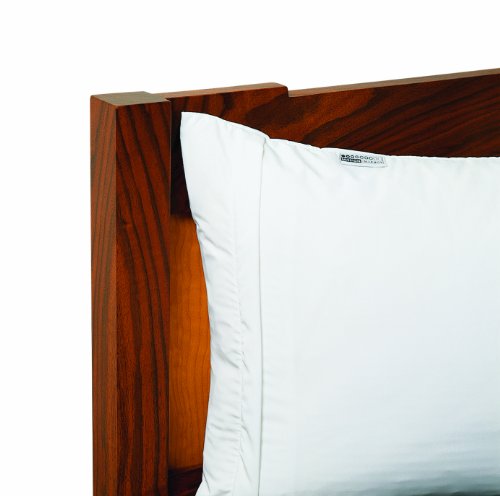
Mission: Allergy Barrier II brings the same enclosure idea to a pillow. The cover is about 27 by 20 inches and uses tightly woven microfiber with a stated mean pore size of 6 microns. The fabric is air- and water-vapor-permeable and is designed to sit underneath the normal pillowcase.
Fit matters because an encasement can add a little bulk to an already oversized pillow. A very full Queen or specialty pillow may become harder to fit inside its decorative pillowcase after this layer goes on. The best use is a standard pillow that matches the cover dimensions without stretching the zipper.
Why It Works
- Disclosed 6-micron mean pore size gives a specific barrier detail.
- Full zippered enclosure surrounds the pillow instead of covering one face.
- Lightweight fabric is intended to remain underneath the normal pillowcase.
What To Keep In Mind
- Measure unusually large or overstuffed pillows before buying.
- Added enclosure bulk can make the outer pillowcase fit more tightly.
- Close the zipper completely; a partially open case no longer provides full enclosure.
4 / 4
AllerEase Standard/Queen Pillow Protectors 2-Pack

Use
Pillow protectors
Pack
2
Size
Standard/Queen
Material
Polyester
Care
Machine wash warm, tumble dry low
AllerEase is the practical two-pillow option. The pack includes two zippered Standard/Queen polyester protectors, and the fabric is positioned with pore sizes below 10 microns. This gives you a matched pair for the two sleeping pillows on a bed without buying the mattress enclosure at the same time.
The protectors can be washed warm and tumble dried on low. They are generally soft and quiet, although some sleepers notice a slight synthetic rustle. Zipper quality is the main inspection point; an occasional broken zipper at opening means it is worth checking both covers before the return window closes.
Why It Works
- Two-pack covers the common pair of sleeping pillows on one bed.
- Standard/Queen sizing works across many everyday pillows.
- Warm-wash care is straightforward for routine bedding maintenance.
What To Keep In Mind
- Check both zippers before washing.
- Some sleepers may notice a faint synthetic sound.
- “Hypoallergenic” does not mean the protector can diagnose, treat, or prevent allergy symptoms.
How to Choose Hypoallergenic Bedding Protectors
Start with the item you need to enclose
Mattress encasements and pillow protectors solve different fit problems. A six-sided mattress cover needs the correct width, length, and depth. A pillow protector needs enough room for the pillow without pulling hard against the zipper.
Look for physical barrier details
Terms such as tight weave, disclosed pore size, full enclosure, and a secure zipper tell you more about the construction than a broad “hypoallergenic” label alone. A smaller stated pore size is not automatically better if the cover fits poorly or the zipper fails.
Match mattress depth closely
Do not force a 9-inch encasement over a 12-inch mattress. Excessive tension can stress seams and zippers. An enclosure that is much too deep can also leave folds underneath the fitted sheet.
Inspect every zipper
The zipper is part of the barrier. Open and close it before installation, check the stitching around the zipper track, and look again after washing. Replace a cover when the closure no longer stays secure.
Keep normal bedding care in the routine
Protective covers do not replace washing sheets, pillowcases, and other washable bedding. Follow the care instructions for each fabric and dry everything fully before remaking the bed.
Frequently Asked Questions
What does hypoallergenic bedding mean?
It generally means the product is designed to reduce exposure to common irritants or uses materials positioned for sensitive sleepers. The term does not guarantee that a specific person will avoid allergy symptoms.
Is a mattress encasement better than a fitted protector for dust-mite barriers?
A full encasement surrounds all six sides of the mattress and closes with a zipper. That gives more complete physical enclosure than a fitted protector that leaves the underside open.
What pore size should an allergy mattress cover have?
There is no single number that guarantees a personal health result. Disclosed pore size is useful as a construction detail, but fit, full enclosure, seam quality, zipper integrity, and wash care also matter.
Should pillows have zippered protectors?
A zippered protector fully encloses the pillow and can sit under the regular pillowcase. Choose the correct size and make sure the zipper closes without straining the fabric.
Can hypoallergenic bedding stop allergy symptoms?
No product can promise that for every sleeper. Nasal, eye, skin, or breathing symptoms can have many triggers. Persistent or serious symptoms should be discussed with a qualified medical professional.
How often should mattress and pillow encasements be washed?
Follow the care label for the exact cover. Washable encasements generally need periodic cleaning, but over-washing or excessive heat can shorten zipper and fabric life if the instructions do not allow it.
If you are trying to understand whether the bedroom pattern could involve mites, the first signs associated with dust-mite exposure explains why symptoms alone do not prove the cause. For washable bedding, what kills dust mites most quickly covers heat, washing, drying, and fabric limits. And whether laundry detergent kills dust mites explains why normal cleaning and temperature matter more than a detergent name.
