

As an affiliate, we may earn a commission from qualifying purchases. We get commissions for purchases made through links on this website from Amazon and other third parties.
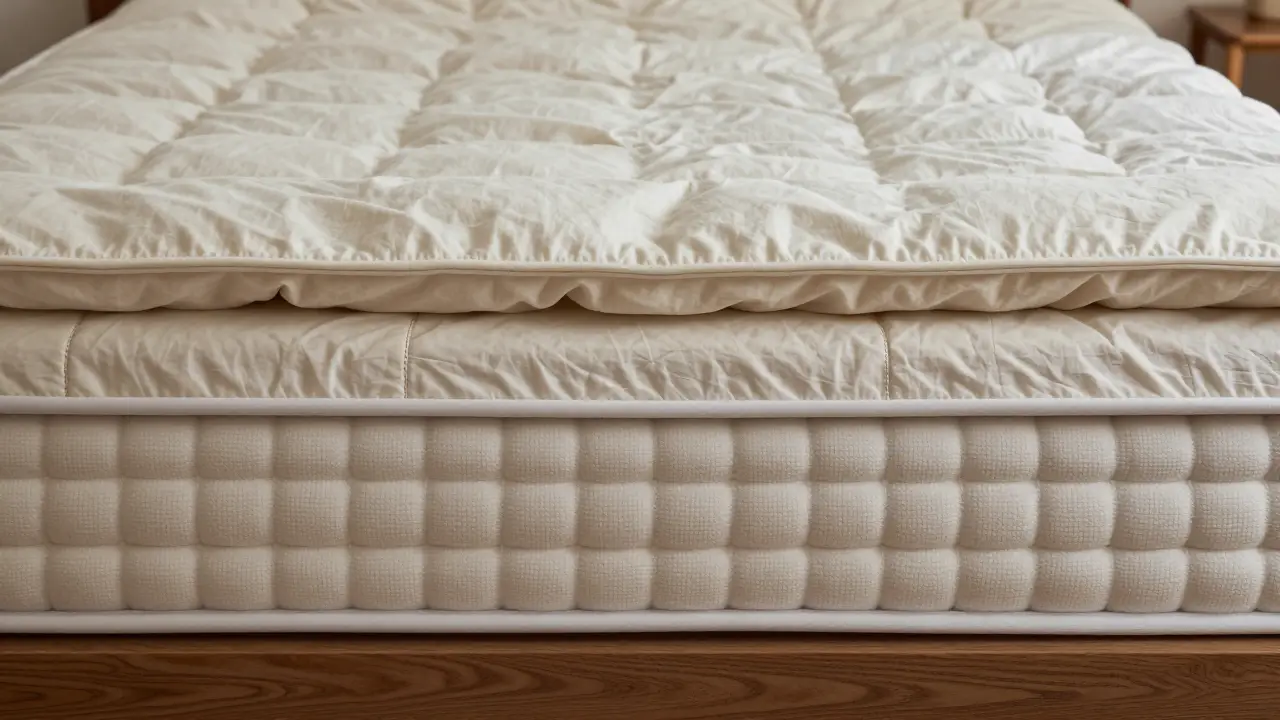
A mattress protector, pad, and topper can all sit under your fitted sheet, but they do very different jobs. A protector is mainly a barrier. A pad adds a little cushioning. A topper can change how soft or deep the mattress feels.
That distinction matters more than any single feature. If your mattress already feels good and you mainly want a washable layer, buying three inches of foam adds cost and height you may not need. If the bed feels too firm, a thin protector will not change that. The six picks below cover those different jobs so you can choose the layer that matches the problem you are actually trying to solve.
Best Protector
Best Plush Mattress Pad
Best High-Density Foam Topper
Six Bed Layers at a Glance
| Pick | Layer type | Best fit | Main tradeoff |
|---|---|---|---|
| SafeRest | Fitted waterproof protector | Keeping the mattress covered without adding much cushioning | Liquid protection can weaken or fail over time |
| Utopia Bedding | Quilted fitted pad | Light softness and easy washing | It is not liquid proof |
| EASELAND | Deep-pocket pillow-top pad | More plushness without a foam slab | Can feel thicker or fluffier than expected |
| Linenspa | Gel-infused memory foam topper | Choosing between lighter and deeper foam softness | Foam can feel warm and restrict easy turning for some sleepers |
| LUCID | Ventilated gel memory foam topper | A deeper plush feel with several thickness choices | Foam can tear, shift, or expand short of the mattress |
| ViscoSoft | Dense foam topper with removable cover | Buyers prioritizing density and a washable cover | Heavier to handle and may develop impressions over time |
Start With the Job, Not the Product Name
The fastest way to narrow this list is to decide what you want the extra layer to do.
Choose a protector if the mattress already feels comfortable and you mainly want a removable barrier between the sleeper and the bed. Choose a pad if you want a modest comfort change without committing to several inches of foam. Choose a topper when the mattress surface feels too firm and you want a more noticeable change in cushioning.
Also check total bed height. A deep topper adds two to four inches before the fitted sheet goes on. If your current sheets already fit tightly, that extra height can create a second shopping problem.
Our Six Picks
1 / 6
SafeRest Waterproof Mattress Protector
Layer type
Fitted waterproof protector
Fit
Stretchable pocket design
Care
Machine washable
Feel goal
Minimal change to mattress feel
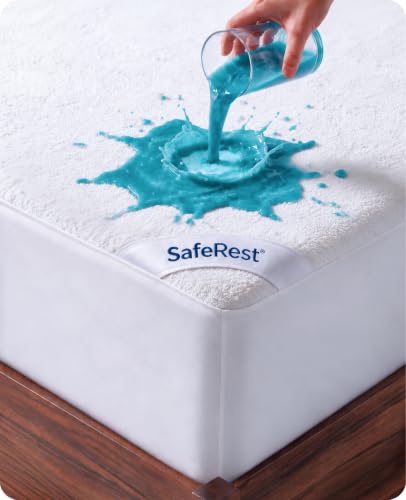
SafeRest makes the most sense when protection is the priority and you do not want a padded layer changing the bed. It uses a fitted-sheet-style design with elastic around the edge, so it goes on like a normal fitted sheet instead of sitting as a loose pad. Its cotton-terry surface is designed to stay quiet rather than provide a comfort upgrade.
That simple role is its strength. You can remove and wash the protector without handling a thick pad or foam slab, and the fitted shape is easier to keep under regular sheets. The main caution is important, though: liquid can get through after extended use or washing. Treat any waterproof protector as a sacrificial layer that still needs periodic inspection rather than a permanent guarantee against mattress damage.
Why It Works
- Adds a washable barrier without intentionally changing firmness.
- Fitted construction is easier to keep in place than a loose cover.
- A good match when the mattress already feels comfortable.
What To Keep In Mind
- The waterproof barrier can leak after use or washing.
- It adds little cushioning, so it will not make a firm mattress noticeably softer.
- Follow the care directions closely and inspect the barrier as it ages.
2 / 6
Utopia Bedding Quilted Mattress Pad

Layer type
Quilted fitted pad
Queen size
60 x 80 in
Pocket fit
Up to 16 in
Care
Machine washable
The Utopia Bedding pad is the simplest step up from a plain protector. Its quilted fill adds a little loft across the sleep surface while the fitted skirt stretches over mattresses up to 16 inches deep. It is also machine washable, which makes it practical for a guest room, kids' bed, or everyday bed where easy care matters.
Do not buy it as a substitute for a foam topper. The cushioning is light, and it is not liquid proof, so a separate waterproof layer is the better choice if spill protection matters. Fabric quality can vary over time, with pilling possible, but the fitted design can add a modest comfort layer without major bulk.
Why It Works
- Adds light quilting without several inches of extra bed height.
- Fits mattresses up to 16 inches deep.
- Whole pad can go in the washer.
What To Keep In Mind
- It is not a waterproof spill barrier.
- Cushioning is much lighter than a foam topper.
- Pilling or inconsistent sizing can occur.
3 / 6
EASELAND Pillow Top Mattress Pad
Layer type
Pillow-top fitted pad
Queen size
60 x 80 in
Pocket range
8-21 in
Fill
30 oz down-alternative fill
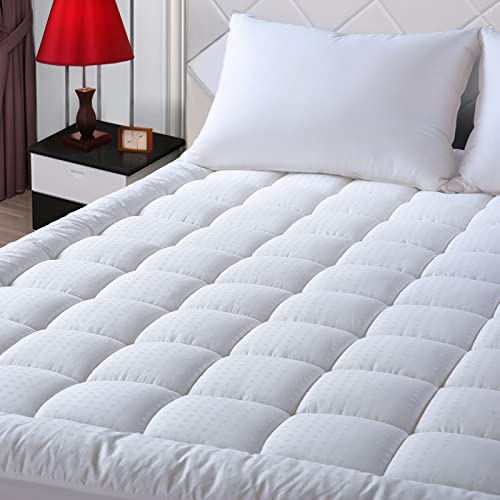
EASELAND sits between a basic quilted pad and a full foam topper. The queen version uses 30 ounces of down-alternative fill and a deep fitted skirt designed for mattresses from about 8 to 21 inches. That makes it a useful option when you want a plusher surface but still prefer one washable fitted piece instead of a separate foam slab and cover.
The padding can feel more substantial than a thin mattress pad, but it is still fiber fill rather than structural foam. Its loft may feel just right, fluffier than expected, or still too thin to count as a true topper. Choose it for surface softness, not for a major support change.
Why It Works
- More plush than a basic quilted pad without adding a multi-inch foam slab.
- Deep pocket range works with many taller mattresses.
- Machine-washable design is easier to maintain than bare foam.
What To Keep In Mind
- Fiber fill does not provide the same structure as memory foam.
- Its loft can look and feel different from what you expect.
- A home washer may be too small for larger sizes once the pad is wet.
4 / 6
Linenspa Gel-Infused Memory Foam Mattress Topper

Layer type
Memory foam topper
Thickness options
2, 3, or 4 in
Setup
Allow 24-48 hr to expand
Certification
CertiPUR-US
Linenspa is the first option here that can make a clear change to mattress feel. It comes in multiple thicknesses, so you can choose a two-inch layer for a smaller comfort adjustment or move to three or four inches for a deeper, softer sink. The foam arrives compressed and needs time to expand before you judge the final shape.
More thickness is not automatically better. Deeper foam can make turning over harder for some sleepers, and the gel-infused design does not guarantee that the bed will sleep cool. The foam can also shed or flake. Pick the shallowest thickness that solves your comfort problem rather than defaulting to the thickest option.
Why It Works
- Several thicknesses let you control how much the mattress feel changes.
- A two-inch option avoids as much extra bed height as deeper toppers.
- Foam provides a more noticeable comfort change than a fiber-filled pad.
What To Keep In Mind
- Some sleepers find memory foam warm or harder to move around on.
- Foam can shed or flake, so keeping it protected from direct wear is sensible.
- Allow the topper to expand before deciding whether the size and shape are right.
5 / 6
LUCID Gel Memory Foam Mattress Topper
Layer type
Ventilated memory foam topper
Thickness options
2, 3, or 4 in
Setup
Allow 24-48 hr to expand
Certification
CertiPUR-US
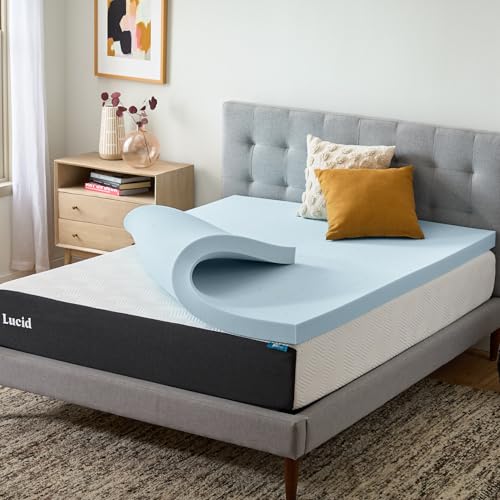
LUCID is another multi-thickness memory-foam option, with two-, three-, and four-inch profiles. Its ventilated foam and gel infusion are intended to manage heat better than a solid unventilated slab, while the deeper sizes are aimed at buyers who want a pronounced plush feel on top of a firm or worn mattress.
The main ownership issue is that this is still exposed foam. Use a waterproof mattress protector over it because the foam can tear, shift, or expand short of the expected length. A four-inch layer can also feel overly deep for some people. If you want this type of topper, measure the finished stack height and plan to protect the foam from spills and friction.
Why It Works
- Gives you several levels of softness without replacing the mattress.
- Ventilated construction is more airflow-conscious than a solid slab.
- Useful when a basic quilted pad would not make enough difference.
What To Keep In Mind
- Tearing, shifting, and incomplete expansion can occur.
- Four inches can create a very deep, sink-in feel.
- A separate protector is useful because the foam itself is not an easy-wash layer.
6 / 6
ViscoSoft 3-Inch Memory Foam Mattress Topper

Layer type
Memory foam topper
Thickness
3 in
Foam density
More than 3 lb/ft³
Cover
Removable rayon cover
ViscoSoft stands out because it specifies foam density instead of relying only on thickness. The three-inch topper uses foam rated above 3 pounds per cubic foot, adds ventilation, and includes a removable cover. That makes it a stronger fit for shoppers who care about foam substance and want a cover they can remove rather than leaving the slab completely bare.
The tradeoff is handling and long-term compression. Dense foam can be awkward to move, and the topper may arrive short, expand unevenly, or develop body impressions after extended use. The removable cover helps with routine ownership, but it does not eliminate the need to measure carefully and give the topper enough time and space to expand.
Why It Works
- A stated density figure gives more useful information than thickness alone.
- Removable cover makes the topper easier to live with.
- Three-inch profile creates a noticeable comfort change without going to four inches.
What To Keep In Mind
- It can be heavy and awkward to position on the bed.
- Incomplete expansion and later body impressions can occur.
- Added topper height may require deeper fitted sheets.
How to Choose Between a Protector, Pad, and Topper
Choose a protector when the mattress already feels right
A protector is the smallest change to the bed. It is mainly about creating a removable layer between daily use and the mattress. That is the best place to start if you are happy with the current firmness and only want easier cleanup.
Choose a pad for a modest comfort change
A quilted or pillow-top pad adds softness without changing the mattress as dramatically as foam. It is also easier to wash as one piece. The tradeoff is that fiber fill compresses and cannot provide the same structure as a multi-inch foam topper.
Choose a topper for a real surface change
Two to four inches of foam can noticeably change how deeply you sink into the bed. That can be useful on a surface that feels too firm, but it also adds height, weight, heat retention risk, and more setup. A topper cannot repair broken support, deep sagging, or a damaged mattress foundation.
Check Sheet Fit Before Adding Thickness
Measure the mattress from the bottom edge to the top surface, then add the thickness of the pad or topper. Compare that total with the pocket depth of your fitted sheets. A three-inch topper on a 14-inch mattress creates a much taller stack than the original bed.
Deep-pocket pads such as the EASELAND can wrap around tall mattresses, but the sheets above them still need enough depth. This is an easy detail to miss until laundry day, when the fitted corners start popping off.
Plan for Washing and Setup
Protectors and fiber pads are generally the easier layers to wash because the whole piece is designed to go into a machine. Large sizes can still exceed the capacity of a small home washer, so check the care label and machine capacity.
Foam toppers need a different routine. Let compressed foam expand in a ventilated room for the time the product specifies. Avoid pulling hard on the foam while repositioning it, especially if it has no cover. A separate washable protector over the topper can help keep spills and skin oils away from the foam.
Frequently Asked Questions
Is a mattress pad the same as a mattress topper?
No. A mattress pad usually adds a light quilted layer, while a topper is typically thicker and changes the mattress feel more noticeably. Foam toppers in this roundup are two to four inches thick.
Do I still need a protector if I use a topper?
A protector can still be useful because most foam toppers are not designed for routine machine washing. It also gives you a removable layer over both the mattress and topper.
How thick should a memory foam topper be?
Use the smallest thickness that gives you the comfort change you want. Two inches creates less stack height, while three or four inches creates a deeper sink and can make movement feel different.
Can a topper fix a sagging mattress?
No. A topper can change surface softness, but it cannot repair broken support, deep body impressions in the mattress, or a failing foundation.
Will a mattress protector change how the bed feels?
A thin protector should change the feel far less than a pad or topper, but every added layer can affect surface texture, airflow, and heat to some degree.
How long should compressed foam expand before use?
Follow the specific product directions. The foam toppers in this roundup generally call for about 24 to 48 hours, but final expansion time and dimensions can vary.
Next, compare dedicated mattress protectors, mattress pads, mattress toppers, and waterproof mattress protectors if you already know which layer your bed needs.
