
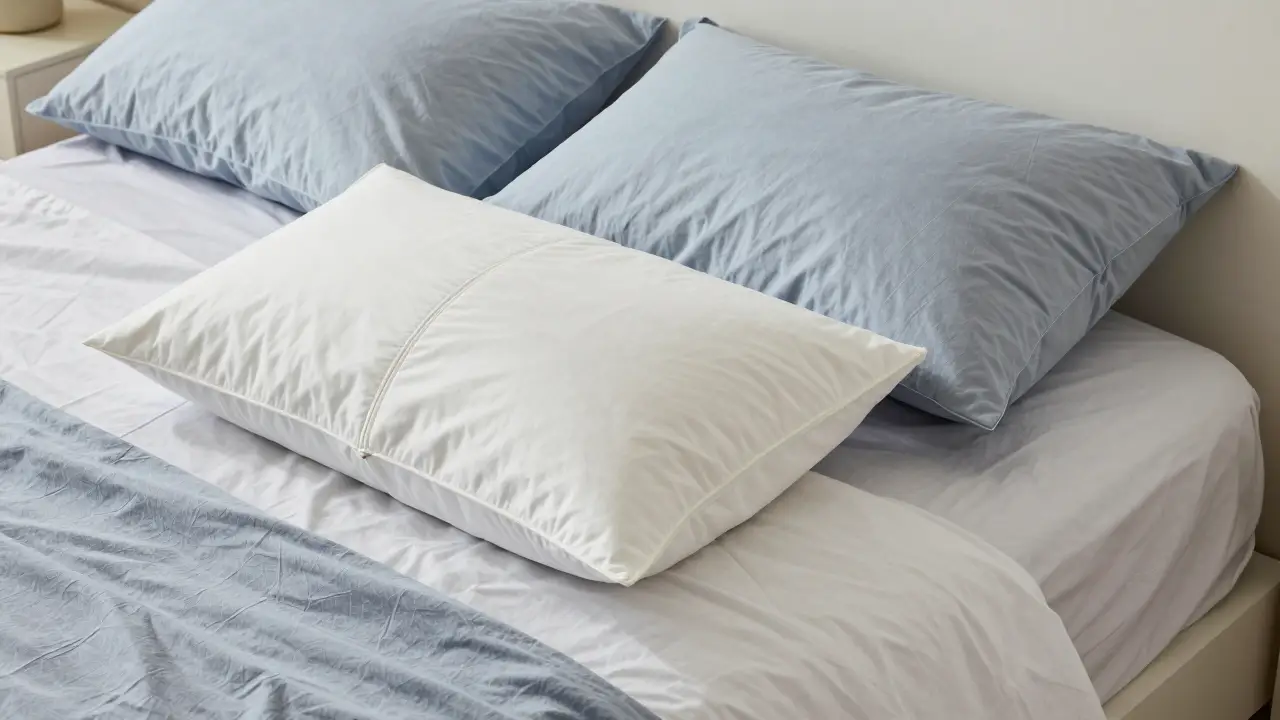

As an affiliate, we may earn a commission from qualifying purchases. We get commissions for purchases made through links on this website from Amazon and other third parties.
A good pillow protector should disappear under your pillowcase. It needs to fit without crushing the pillow, stay quiet when you move, survive regular washing, and add the level of moisture protection you actually need. A protector that runs hot, pulls too tightly, or fails at the zipper can be more annoying than helpful.
Before washing pillow protectors, confirm material compatibility and avoid leaving excess moisture in thick fabric or padding.
The six picks here cover different jobs: a secure cotton-terry option, a smooth king-size two-pack, a four-pack for several queen pillows, softer cotton-surface coverage, a quiet standard-size option, and a memory-foam-focused protector. Waterproof claims also deserve caution. A protector can still leak in use even when its listing calls it waterproof, so fit, feel, and construction matter too.
Before choosing hotel-style mattress protectors, compare materials, construction, dimensions, care, and the job the product must do.
Best Overall
Best for King Pillows
Best Four-Pack
Pillow Protectors at a Glance
| Product | Size / pack | Surface or feel | Main strength | Main tradeoff |
|---|---|---|---|---|
| SafeRest Premium | Queen, single | Cotton-terry style | Secure zippered fit with membrane backing | Can feel snug and less airy |
| AllerEase | King, 2-pack | Smooth polyester | Easy-care king coverage with quiet feel | Polyester feel may not suit everyone |
| Utopia Bedding | Queen, 4-pack | Terry polyester | Four protectors for multiple pillows | Thicker, fuzzier feel can run warmer |
| SureGuard | Queen, 2-pack | Soft cotton surface | Roomier feel and easy installation | Can let liquid pass through |
| Four Seasons Essentials | Standard, 2-pack | Soft, quiet surface | Standard-size everyday encasement | Waterproof performance is disputed |
| Coop Home Goods Ultra-Tech | Queen, 2-pack | Soft protective fabric | Fit-oriented option for memory-foam pillows | Heat, pilling, zipper, and wash-durability concerns |
What Matters Most in a Pillow Protector
Fit comes before features
A protector that is too small can squeeze a lofty pillow until it feels firmer and less comfortable. A loose protector can wrinkle, bunch, or let the pillow slide around inside. Size labels help, but pillows with the same "queen" or "standard" name can still have different loft and shape.
Measure the pillow's length and width, then account for thickness. This is especially important with shredded-foam, contour, gusseted, and extra-lofty pillows. If a protector has very little spare room, its waterproof layer or zipper may also be under more stress.
Waterproof does not mean every claim is equally trustworthy
A real liquid barrier needs more than an absorbent top fabric. Many protectors use a membrane or backing under cotton terry or polyester. The outer fabric may absorb moisture while the backing is supposed to stop it from reaching the pillow.
However, product wording and actual liquid performance do not always line up. SureGuard and Four Seasons Essentials can let liquid pass through. Their softer feel, fit, pack size, or quietness may still be useful, but they are not the dependable waterproof choices in this group.
Heat and noise are part of protection
A thicker barrier can change how a pillow feels. Some sleepers barely notice it. Others find a protector warmer, stiffer, or less breathable. A noisy or crinkly layer can also be distracting, especially on a pillow that sits close to your ears.
Surface fabric matters too. Terry can feel soft but may add thickness. Smooth polyester often slides more easily under a pillowcase. Cotton surfaces can feel familiar, but the backing underneath still affects airflow.
Zippers deserve attention
Most of these products use a zipper because full coverage stays in place better than an open-ended sleeve. The zipper should close without pulling hard against the pillow and should not sit in an uncomfortable spot near your face.
Durability matters because the zipper gets used every time the protector comes off for washing. Broken zipper tracks, holes, pilling, and seam failure matter more than decorative product language.
The Best Pillow Protectors
1 / 6
SafeRest Premium Waterproof Pillow Protector

Size
Queen
Pack
1 protector
Surface
Cotton-terry style
Closure
Micro-zipper
Care
Machine wash and low tumble dry
SafeRest is the most balanced pick because it combines a soft cotton-terry-style surface, a small zippered closure, and a polyurethane membrane backing without relying on an oversized or complicated design. The zipper keeps the protector enclosed around the pillow, and the surface is quieter and more fabric-like than a plain plastic cover.
The main fit caution is snugness. A thick or unusually lofty queen pillow can feel tighter once enclosed, and a protective membrane can reduce airflow compared with a plain cotton pillowcase. Measure first if your pillow is overstuffed or has a tall gusset.
Why It Works
- The cotton-terry-style surface feels more like bedding than exposed plastic.
- A small zipper keeps the protector from sliding off the pillow.
- A polyurethane membrane provides the liquid barrier beneath the terry surface.
- Machine washing and low tumble drying make routine care straightforward.
What To Keep In Mind
- A snug fit can compress a very lofty pillow.
- Any waterproof layer may feel warmer than an unprotected pillow.
- Keep your normal pillowcase over the protector for the surface feel you prefer.
2 / 6
AllerEase Waterproof Pillow Protectors

Size
King
Pack
2 protectors
Surface
Smooth polyester
Closure
Zippered
Care
Machine washable
AllerEase is the strongest king-size option in this group. The two-pack gives both pillows on a king bed matching coverage, and the smooth polyester surface is easier to slide into a regular pillowcase than a thick fuzzy protector. A waterproof layer sits beneath the soft top fabric.
This is a practical pick when you want simple full coverage rather than a plush surface. Polyester may feel less natural than cotton if you sleep directly against it, but that matters less when the protector is used correctly under a pillowcase. Its quiet feel is also useful for a layer that sits close to your ears.
Why It Works
- The king-size two-pack covers a typical pair of bed pillows in one purchase.
- A smooth surface is easy to layer under a pillowcase.
- Zippered coverage keeps the protector in place.
- The soft top fabric has a waterproof layer beneath it.
What To Keep In Mind
- Smooth polyester feels different from cotton terry.
- Measure thick king pillows rather than relying only on the size name.
- Wash and dry according to the current care label to protect the backing and zipper.
3 / 6
Utopia Bedding Terry Pillow Protectors 4-Pack

Size
Queen
Pack
4 protectors
Surface
Polyester terry
Closure
Zippered
Care
Machine wash, tumble dry low
Utopia Bedding is the quantity pick for a home with several queen pillows. Four zippered protectors are useful for a main bed, guest room, or a rotation where you want a clean spare while another pair is in the laundry. The terry polyester surface is designed to add a soft fabric layer rather than a slick plastic feel.
The tradeoff is thickness. The fuzzy terry surface can feel warmer than a thin smooth protector, and some pillows can shift inside if there is extra room. Treat the queen label as a starting point rather than a guaranteed fit for every lofty or gusseted pillow.
Why It Works
- Four protectors are convenient for households with several queen pillows.
- Zippered coverage keeps the pillow fully enclosed.
- Terry polyester gives the protector a softer surface.
- Machine washing and low tumble drying fit normal bedding care.
What To Keep In Mind
- The thicker terry feel can sleep warmer.
- Pillow movement inside the cover can affect comfort if the fit is loose.
- Measure a thick or gusseted pillow before relying on the queen size label.
4 / 6
SureGuard Pillow Protectors 2-Pack

Size
Queen
Pack
2 protectors
Surface
Soft cotton
Closure
Zippered
Care
Machine washable
SureGuard stands out for a softer cotton surface and a roomier feel that is easier to install over puffy queen pillows. That makes it appealing when comfort and fit are more important than choosing the thinnest possible protective layer. The two-pack also makes sense for a typical bed with two sleeping pillows.
The caution is liquid protection. Liquid can pass through this protector despite its waterproof wording. Because of that, it is recommended here for its cotton surface, enclosed fit, and everyday washable barrier—not as the pick for accidents or spills where dependable waterproofing is the main requirement.
Why It Works
- A soft cotton surface feels familiar under a regular pillowcase.
- The roomier fit can be easier to install on fuller pillows.
- A two-pack covers a common pair of queen pillows.
- Zippered coverage keeps the protector wrapped around the pillow.
What To Keep In Mind
- Do not rely on this pick for guaranteed liquid protection.
- Its waterproof wording does not match every liquid-exposure result.
- Choose another option if spill protection is the main reason you are buying a protector.
5 / 6
Four Seasons Essentials Pillow Protectors 2-Pack

Size
Standard
Pack
2 protectors
Closure
Zippered
Feel
Soft and quiet
Care
Follow current care label
Four Seasons Essentials is the standard-size pick for shoppers who care most about a soft, quiet encasement. The protector is made to zip around the whole pillow rather than sit loosely like a second pillowcase, and the two-pack works well for a pair of standard pillows.
As with SureGuard, waterproof performance is not a safe selling point here because liquid can pass through. The useful case for this product is quieter everyday coverage and standard-size fit. If the protector is being bought specifically for bedwetting, frequent spills, or pet accidents, choose another model.
Why It Works
- The soft, quiet surface avoids one common complaint about protective bedding layers.
- A zippered enclosure keeps the protector around the entire pillow.
- The two-pack is practical for a pair of standard pillows.
- It works as an everyday washable layer beneath a pillowcase.
What To Keep In Mind
- Liquid can pass through despite the waterproof description.
- Do not depend on a disputed exact dimension when checking fit.
- A standard-size label still does not guarantee room for an unusually lofty pillow.
6 / 6
Coop Home Goods Ultra-Tech Pillow Protectors 2-Pack

Size
Queen
Pack
2 protectors
Closure
Zippered
Best fit
Memory-foam-focused pillows
Care
Cold gentle machine wash
Coop's Ultra-Tech protector is the most directly aimed at memory-foam pillows in this group and can be a useful match when you want a zippered cover sized around fuller foam pillows. The queen two-pack also makes sense for a bed with two matching pillows, and the fabric is designed around a protective barrier rather than a loose decorative cover.
This is also the most caution-heavy pick. It can add heat to a cooling-focused pillow, pill heavily, fail at the zipper, or develop a hole after washing. It can also fit securely and keep a pillow clean and dry, but those durability and temperature tradeoffs keep it below the simpler options above.
Why It Works
- The fit is oriented toward memory-foam and fuller pillow shapes.
- Two queen protectors cover a common pillow pair.
- Zippered construction keeps the cover enclosed around the pillow.
- It can provide a secure fit and effective everyday protection.
What To Keep In Mind
- It can make a cooling-focused pillow feel noticeably hotter or firmer.
- Pilling, zipper failure, and wash-related damage are possible.
- Follow the cold, gentle wash directions and avoid aggressive drying.
- Certification-style product language should not be treated as a guarantee of comfort or performance.
Which Surface Is Best: Terry, Cotton, or Smooth Polyester?
There is no single best surface because the protector normally sits under a pillowcase. What matters is whether the inner layer changes the pillow's feel enough for you to notice it.
Cotton and cotton-terry surfaces feel familiar and can absorb a little surface moisture before it reaches the backing. They may also be thicker than a smooth fabric.
Polyester terry is soft and easy to wash, but a fuzzy surface can add warmth and bulk.
Smooth polyester slides into pillowcases easily and can feel less bulky. Some shoppers simply prefer a more natural-feeling cotton surface.
The waterproof membrane underneath can affect heat and flexibility no matter what the top fabric is. If your pillow was chosen mainly for cooling, use the thinnest protector that meets your actual protection needs.
How to Get the Right Fit
- Measure the pillow itself. Check length, width, and approximate loft.
- Do not assume every queen or standard pillow is identical. Foam, down, shredded fill, and gusseted designs can vary a lot.
- Leave enough room for the pillow to keep its shape. A protector should not turn a soft pillow into a hard block.
- Zip without forcing it. Pulling hard on the zipper is a warning that the fit is too tight.
- Add the normal pillowcase over the protector. The protector is the inner protective layer, not usually the sleep surface.
- Recheck after washing. Heat and care mistakes can change fit or damage a waterproof backing.
How Often Should You Wash a Pillow Protector?
A protector does not need to be washed every time the pillowcase is changed unless it is visibly dirty, damp, or involved in a spill. Your pillowcase catches most everyday skin oil and hair products first.
The protector still needs regular care because sweat, drool, dust, and residue can reach it. Follow the product's care label rather than using one rule for every protector. Waterproof membranes can be damaged by excessive heat, bleach, fabric softener, or rough treatment depending on the product.
Before washing, close the zipper so it is less likely to catch on other laundry. Inspect the seams and backing when the protector comes out. A tiny hole can matter if liquid protection is the reason you use it.
When a Waterproof Pillow Protector Makes Sense
Waterproof protection is most useful when the pillow is difficult to wash or expensive to replace, or when spills, drool, damp hair, kids, or pets make liquid exposure likely. It can also help protect foam pillows whose inner material should not be soaked.
You may not need a heavy waterproof barrier on every pillow. A guest-room pillow or washable fiberfill pillow may only need a light zippered protector that keeps body oils and dust away from the shell. More protection usually means more material, and more material can mean more heat or a different feel.
Choose the lightest protection that solves the actual problem.
Frequently Asked Questions
What is the best pillow protector overall?
SafeRest is the most balanced pick in this group because it combines a soft cotton-terry-style surface, zippered coverage, straightforward care, and a polyurethane membrane backing. Very lofty pillows may need more room than its queen fit provides.
Do I still use a pillowcase with a pillow protector?
Yes. The protector goes directly over the pillow, and your normal pillowcase goes over the protector. The pillowcase gives you the surface feel and style you want while the protector stays underneath.
Are all pillow protectors waterproof?
No. Some are mainly washable fabric barriers, and even products sold with waterproof language can leak in use. If spills are your main concern, choose a protector with a clearly described membrane backing and inspect it for damage after washing.
Can a pillow protector make a pillow hot?
Yes. Waterproof membranes and thicker terry surfaces can reduce airflow or add warmth. This matters most when the pillow itself was chosen for cooling.
Can a pillow protector make my pillow feel firmer?
A protector that fits too tightly can compress the pillow and make it feel firmer. Measure thick, gusseted, and foam pillows before buying rather than relying only on the size label.
How many pillow protectors do I need?
Most beds use two sleeping pillows, so a two-pack is convenient. A four-pack can make sense for guest rooms, multiple beds, or keeping spare clean protectors ready for laundry day.
Should I wash a new pillow protector before using it?
Follow the current product care instructions. If you choose to wash it first, use the specified wash and dry settings so you do not damage the zipper, backing, or fit before the first use.
What should I do if a waterproof protector develops a hole?
Replace it if dependable liquid protection matters. A hole, separated seam, or damaged backing can let moisture through even when the rest of the protector looks fine.
If you are still deciding whether the extra layer is worthwhile, whether pillow protectors are a good idea explains the everyday cleanliness, comfort, and care tradeoffs. Once you have one, how to layer a pillowcase over a pillow protector shows where each layer belongs and why the pillowcase still matters. If liquid protection is your main concern, how waterproof bedding protectors actually block moisture explains barrier layers, water resistance, and the limits of waterproof labeling.
