

As an affiliate, we may earn a commission from qualifying purchases. We get commissions for purchases made through links on this website from Amazon and other third parties.
A dry-clean-only comforter may only need a light refresh when the problem is stale odor, surface wrinkles, or one small spot. That does not mean every at-home product is safe for the whole comforter. Start with the sewn-in care label and the current manufacturer guidance, then choose a method only if the shell, fill, trim, and drying instructions allow that exact kind of heat, steam, moisture, solvent, or tumbling.
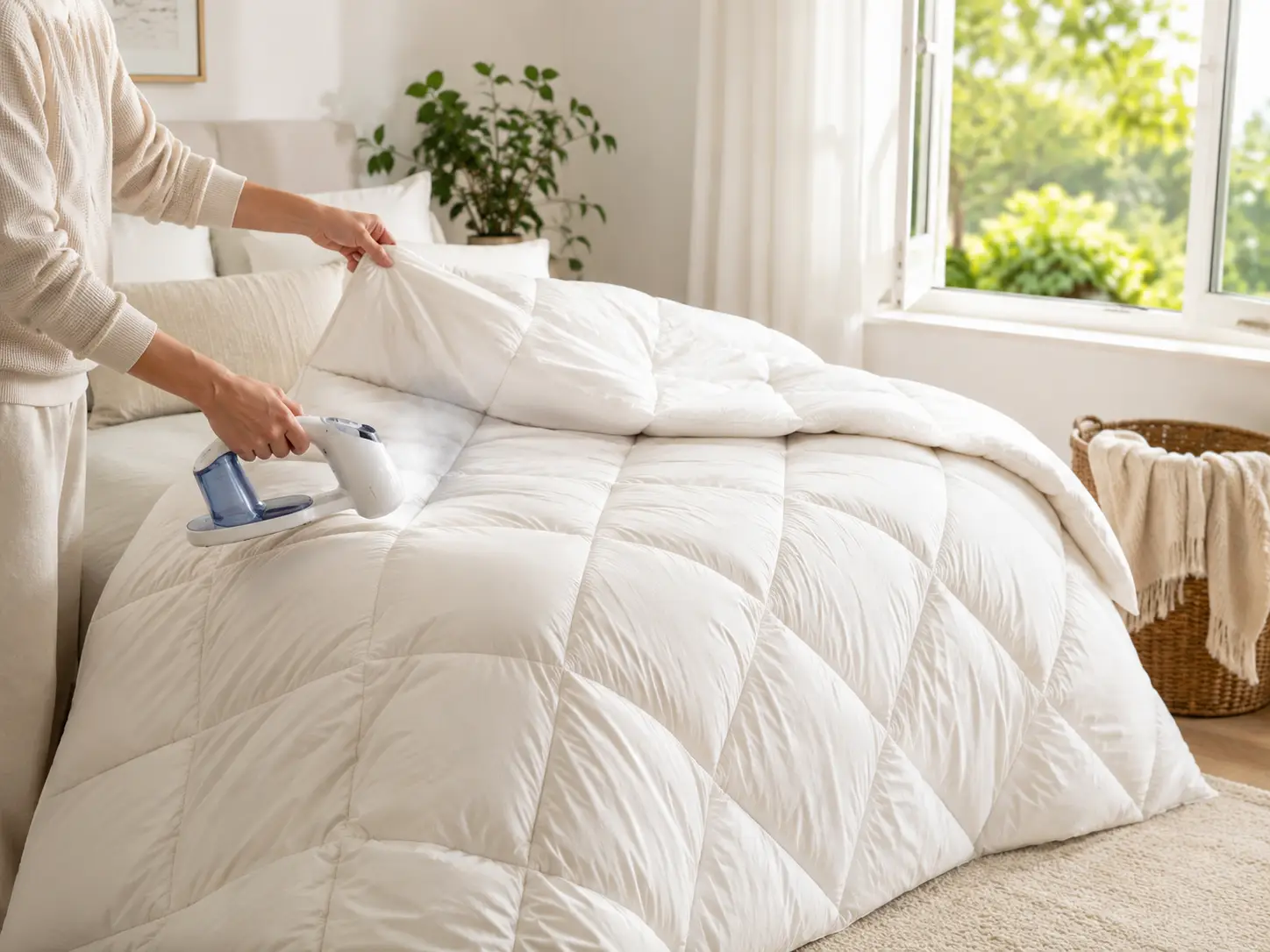
A garment steamer can refresh a comforter only when its care guidance permits heat and moisture on the shell and fill.
None of the six products here proves that a dry-clean-only comforter can be fully cleaned at home. They are narrow tools for specific refresh jobs. A dryer kit can help compatible fabrics with odor and wrinkles. Steam targets wrinkles. Fabric spray adds moisture for odor refreshing. Dry-cleaning fluid is for a tiny spot. Dryer balls are only a tumbling aid and do not clean the comforter.
Best At-Home Kit
Best for Wrinkles
Best for a Small Oily Spot
Refresh Methods at a Glance
| Product | Main job | Exposure added | Best use | Stop condition |
|---|---|---|---|---|
| Dryel 8-Load Starter Kit | Odor, wrinkles, small pretreatment | Dryer heat and tumbling | Compatible special-care items that can tumble freely | Label forbids tumble drying or comforter crowds the dryer |
| Conair 2-in-1 Steamer | Wrinkles | Heat and steam moisture | Label-approved shell sections | Coated, heat-sensitive, non-steamable, or moisture-sensitive fabric |
| ForceField Dry Cleaning Fluid | Small oily or greasy spot | Solvent | Tiny tested spot on compatible fine fabric | Color change, ring, odor concern, large stain, or label conflict |
| Febreze Professional Fabric Refresher | Odor refresh | Damp spray | Label-approved soft surface that can dry fully | Label forbids spray/moisture or fill may stay damp |
| Woolite At-Home Dry Cleaner Cloths | Simple dryer refresh | Dryer heat and tumbling | Compatible special-care fabric with free tumbling space | Bulky comforter cannot tumble freely |
| Smart Sheep Wool Dryer Balls | Tumble movement only | Dryer heat and mechanical tumbling | Optional aid when machine drying is explicitly allowed | Dry-clean-only label does not permit tumble drying |
Start With a Care-Label Stoplight
Green light: low-risk freshening that does not conflict with the label
Airing out a clean comforter, removing loose lint or pet hair, and gently redistributing fill may be enough when the comforter is simply stale from storage. These steps do not require adding detergent, solvent, or dryer heat.
Yellow light: a method the label and manufacturer guidance allow
Dryer kits, steam, fabric sprays, and spot products all add something the comforter may react to. Use them only when the directions for both the comforter and the product are compatible. Patch-test a hidden area when directed, and give any damp treatment time to dry completely.
Red light: professional cleaning
Stop when the label says professional dry cleaning only, forbids the method you are considering, or the comforter has delicate trim, unstable dye, leather, glued details, valuable fabric, damaged seams, or a large unknown stain. A bad at-home experiment can cost more than the cleaning you were trying to avoid.
Choose by the Problem, Not the Product
For stale odor
Air the comforter first. If more is needed, a dryer kit or fabric refresher may be an option only when the label permits the required heat or damp application. Odor can also signal that the comforter needs true cleaning rather than another scent layer.
For wrinkles
Steam is more targeted than putting an entire bulky comforter in the dryer. It still introduces heat and moisture, so test the shell and avoid coatings, foam, electrical parts, or heat-sensitive trims.
For one small oily mark
A water-free dry-cleaning fluid fills a narrow spot-treatment role. It is not a product to pour or spray across the comforter. Work only as directed, test first, and stop if the fabric darkens, rings, or changes texture.
For loft after approved tumbling
Dryer balls can help move a tumble-approved comforter around the drum. They do not remove soil, odors, or stains. If the care label does not allow machine drying, dryer balls are not a workaround.
The Best Ways to Refresh a Dry-Clean-Only Comforter at Home
1 / 6
Dryel At-Home Dry Cleaner 8-Load Starter Kit

Format
Dryer-activated starter kit
Capacity
8 loads
Cycle
About 20 minutes
Bag
Not used
Included tools
Stain remover and wrinkle-release spray
Dryel is the fullest general refresh system in this group. It combines dryer-activated sheets with a stain tool and wrinkle-release spray, giving you separate ways to address light odor, wrinkles, and a small spot. The bag-free cycle takes about 20 minutes and is designed around special-care fabrics and dry-clean-only clothing.
The important limitation is size and intended use. Dryel is designed around garments, not bulky comforters. Only consider it when the comforter's own care instructions permit the dryer conditions and the item has enough drum room to tumble freely. A comforter wedged against the drum wall is not a good candidate.
Why It Works
- The starter kit covers more than one light-refresh problem.
- Bag-free use avoids squeezing the item into a separate cleaning bag.
- The stain tool keeps spot treatment separate from the main dryer cycle.
- About 20 minutes is practical for compatible small or freely tumbling special-care items.
What To Keep In Mind
- Garment-focused use does not guarantee safe use on a bulky comforter.
- Do not use it when the comforter label forbids tumble drying or the required heat.
- Heavy stains and deep soil still call for professional cleaning.
2 / 6
Conair 2-in-1 Handheld Steamer and Iron

Format
Handheld steamer and iron
Power
1875 W
Warm-up
About 10 seconds
Runtime
Up to about 10 minutes
Steam levels
4
The Conair is the wrinkle-focused tool. It heats in about 10 seconds, works vertically or horizontally, and includes a delicates bonnet. That makes it easier to work on a wrinkled section of a label-approved comforter shell without putting the whole comforter through a dryer cycle.
Steam still adds heat and moisture. A dry-clean-only label does not automatically mean steam is safe, and the unit can leak or spit water. Test a hidden area, wait for stable steam, keep the head moving, and stop if droplets begin landing on the shell. Thick fill also needs enough time to dry if any moisture reaches it.
Why It Works
- Fast warm-up makes small wrinkle jobs practical.
- Vertical and horizontal use helps on large fabric surfaces.
- Four settings give more control over steam output.
- The delicates accessory is useful when the fabric instructions allow steaming.
What To Keep In Mind
- Steam is not a cleaning substitute for soil or odor inside the fill.
- The steamer can spit water or leak.
- Do not steam coated, glued, heat-sensitive, or care-label-incompatible areas.
3 / 6
ForceField Dry Cleaning Fluid for Fine Fabrics

Format
Water-free spot fluid
Size
4 oz
Best use
Small oil or grease spots
Fabric positioning
Silk, wool and delicate upholstery
Method
Targeted blotting
ForceField has the narrowest but clearest job: a small oily or greasy spot on a compatible fine fabric. The four-ounce water-free solvent is made for targeted treatment rather than whole-item refreshing, which is exactly how it should be treated on a comforter. If one tiny mark is the only problem, a spot method can avoid exposing the entire shell and fill to water or dryer heat.
Patch testing is essential. The fluid can remove a small oily spot, but it can also smell strong, work poorly, or mark silk. Work with ventilation, follow the exact blotting directions, and stop if a hidden test changes the color or finish. A large stain, unknown stain, or valuable shell belongs with a professional cleaner.
Why It Works
- The method is targeted instead of treating the whole comforter.
- Water-free solvent is aimed at oil and grease rather than general washing.
- Fine-fabric positioning makes it relevant to delicate shells when directions allow it.
- A small bottle discourages treating the comforter like a washable surface.
What To Keep In Mind
- It is a spot remover, not a whole-comforter cleaner or deodorizer.
- Odor and fabric-marking complaints make hidden-area testing important.
- Use ventilation and keep the product away from ignition sources according to its current safety directions.
4 / 6
Febreze Professional Fabric Refresher Spray

Format
Fabric refresher spray
Pack
3 bottles
Bottle size
32 fl oz
Supported surfaces
Includes blankets and pillows
Best use
Label-approved odor refresh
Febreze is the broad-surface spray option when the comforter and product directions both allow a damp fabric application. The product is positioned for soft surfaces including blankets and pillows, so it has a clearer bedding connection than the garment-led dryer products. It can be useful when the goal is odor refreshing rather than wrinkle removal.
Do not turn its antimicrobial or sanitizing language into a blanket promise for a dry-clean-only comforter. Effective use depends on the exact directions, wetness, contact conditions, fabric compatibility, and drying. For this roundup, the safe role is a label-approved fabric refresher. Spray lightly as directed and make sure the comforter dries completely before returning it to the bed.
Why It Works
- Blankets and pillows are included among supported soft-surface uses.
- Spray application lets you work by section instead of tumbling the whole comforter.
- It targets stale odor rather than pretending to deep-clean the fill.
- The larger bottle format suits occasional bedding and upholstery refreshing.
What To Keep In Mind
- Do not apply if the comforter label forbids moisture or spray treatments.
- A thick comforter can hold dampness longer than the shell appears wet.
- Sanitizing-style claims require exact product directions and are not treated here as a general bedding guarantee.
5 / 6
Woolite At-Home Dry Cleaner Cloths

Format
Dryer cleaning cloths
Count
6 cloths
Bag
Not used
Scent
Fresh scent
Fabric positioning
Includes wool and cashmere garments
Woolite is the simpler dryer-cloth alternative to a full starter kit. The six fresh-scent cloths use a bag-free dryer method and are positioned for special-care clothing, including wool and cashmere garments. If you already have a small compatible item that can tumble safely, the cloth-only format is straightforward.
A bulky comforter is a different job from the garments this product is designed for. Similar fiber names are not enough: a wool sweater and a wool-filled or wool-shell comforter can have different construction and care instructions. Only use the cloths when the comforter can tumble freely and its own label permits the dryer routine.
Why It Works
- Cloth-only format is simple for an established dryer-refresh routine.
- Bag-free use allows compatible items to tumble directly in the dryer.
- Special-care fabric positioning includes wool and cashmere garments.
- It adds a fresh scent while addressing light odor and wrinkles.
What To Keep In Mind
- Garment compatibility does not prove comforter compatibility.
- Skip it if the comforter cannot tumble freely or the label forbids dryer heat.
- Remove compatible items promptly after the cycle as directed.
6 / 6
Smart Sheep Wool Dryer Balls 6-Pack

Format
Wool dryer balls
Pack
6
Role
Tumbling and drying aid
Use
Machine-dryer loads
Cleaning action
Not a cleaner or deodorizer
Smart Sheep dryer balls are not a cleaning product, which is why they belong last. Their role is to move around a dryer load and help separate fabric during an approved machine-drying cycle. If a comforter is already clean and its label explicitly allows tumbling, dryer balls can be an optional aid during that permitted process.
They are not a workaround for a "do not tumble dry" instruction and do not remove stains or stale odor on their own. A dry-clean-only comforter may have a shell, fill, stitching, or trim that should not go into the dryer at all. Read the label before treating "fluffing" as harmless.
Why It Works
- Six balls are enough for a larger tumble-approved load.
- Reusable balls do not add a cleaning solution to the comforter.
- They can help separate fabric during an allowed dryer cycle.
- The role is simple and does not require pretending they clean the bedding.
What To Keep In Mind
- Dryer balls are not cleaners, stain removers, or deodorizers.
- Do not use them when the comforter label prohibits machine drying.
- A comforter still needs enough drum room to tumble without being packed tight.
A Safer Refresh Routine Before You Reach for a Product
- Read the care label and current manufacturer guidance. Identify explicit limits on washing, tumbling, ironing, steam, spot cleaning, and solvents.
- Air the comforter out. Hang or drape it in a clean, dry, well-ventilated area away from conditions that could fade or damage the fabric.
- Remove loose debris. Use a care-label-safe lint tool or gentle surface method rather than wetting the comforter immediately.
- Decide what the problem actually is. Odor, wrinkles, and one oily spot need different treatments.
- Choose only a compatible method. Do not combine steam, spray, solvent, and dryer heat just because one method did not solve everything.
- Patch-test when directed. Pick a hidden area and look for color, texture, or finish changes.
- Dry completely. Any introduced moisture must be gone before the comforter returns to the bed or storage.
When Professional Cleaning Is the Better Choice
Use a professional cleaner when the comforter has a large or unknown stain, strong persistent odor, smoke contamination, delicate trim, unstable dye, damaged seams, special fill, or a label that specifically requires professional care.
Professional cleaning also makes sense when the comforter is too large to tumble freely in your dryer. A dryer-based home kit does not become safer because the door closes. The item needs room to move without packing the drum.
If the comforter is expensive, sentimental, or difficult to replace, the risk tolerance should be lower.
Frequently Asked Questions
What is the safest way to freshen a dry-clean-only comforter at home?
Start by airing it out and removing loose surface debris. Add steam, spray, spot fluid, or dryer treatment only when the care label and manufacturer guidance allow that exact method.
Can I put a dry-clean-only comforter in the dryer with Dryel?
Only if the comforter's own care instructions allow the dryer conditions and the comforter has enough room to tumble freely. Dryel is designed around garments, so do not assume every dry-clean-only comforter is safe in the system.
Can I steam a dry-clean-only comforter?
Sometimes, but only when the shell and construction tolerate steam. Check the label, test a hidden area when directed, keep the steamer moving, and avoid trapping moisture in thick fill.
Can I spray fabric refresher on a dry-clean-only comforter?
Only when the comforter label and the spray directions both allow the application. Use the amount directed and let the comforter dry completely before returning it to the bed.
Can I spot-clean an oily mark with dry-cleaning fluid?
A product made for fine-fabric spot treatment can be appropriate for a tiny compatible area, but patch-test first. Stop if the fabric changes color, develops a ring, or reacts to the solvent.
Do wool dryer balls clean a comforter?
No. Dryer balls are a tumbling aid, not a cleaner or deodorizer. Use them only during a machine-drying cycle the comforter label already permits.
How do I know if my comforter is too large for a dryer refresh kit?
If the comforter fills the drum so tightly that it cannot lift and tumble freely, it is too large for a dryer-based refresh. Closing the dryer door is not enough.
When should I stop refreshing and get the comforter professionally cleaned?
Use professional care for large or unknown stains, persistent odor, delicate construction, valuable bedding, label conflicts, or any situation where home treatment risks damaging the shell or fill.
For a care-label-first routine that starts with the least aggressive steps, how to freshen a dry-clean-only comforter explains airing, surface cleaning, spot limits, and professional-cleaner triggers. If you are deciding whether the whole item should simply go out for service, whether dry cleaning a comforter is worth it weighs size, fill, care labels, and equipment. For the broader rules around bedding and professional cleaning, whether bedding can be dry cleaned helps separate washable pieces from items that need more cautious care.
