How to Compress Comforters for Storage?
Compress comforters safely by matching the storage method to the fill. Compare folding, vacuum bags, short-term compression, and loft-protection limits.

Bedding storage and protection guides covering vacuum bags, under-bed storage, moisture, pests, folding, and seasonal care.
Compress comforters safely by matching the storage method to the fill. Compare folding, vacuum bags, short-term compression, and loft-protection limits.
Store clean, fully dry bedding in breathable bags or covered bins in a cool, low-humidity space. Compare closet, under-bed, and seasonal options.
Store a clean, fully dry comforter loosely in a breathable bag and a cool, dry space. Learn when folding, bins, or vacuum compression are appropriate.
Most people store bedding in a linen closet, dresser, under-bed container, storage bench, or labeled bin. The best spot is clean, dry, and easy to reach.
Store seasonal clothes clean and dry in labeled, material-appropriate containers. Compare bins, fabric bags, drawers, and suitcases for your space.
Prevent mold in underbed storage by packing only clean, fully dry items, controlling humidity, and checking containers regularly for trapped moisture.
Clothes can get moldy in vacuum-sealed bags if they are packed while damp, dirty, or stored in a humid place. Review the main tradeoffs before deciding.
A vacuum-sealed bag does not guarantee that a trained dog will or will not detect a target odor. Packaging, odor availability, training, and conditions matter.
Not every comforter can be vacuum sealed safely. Learn which fills tolerate compression, which need loose storage, and how to prevent moisture damage.
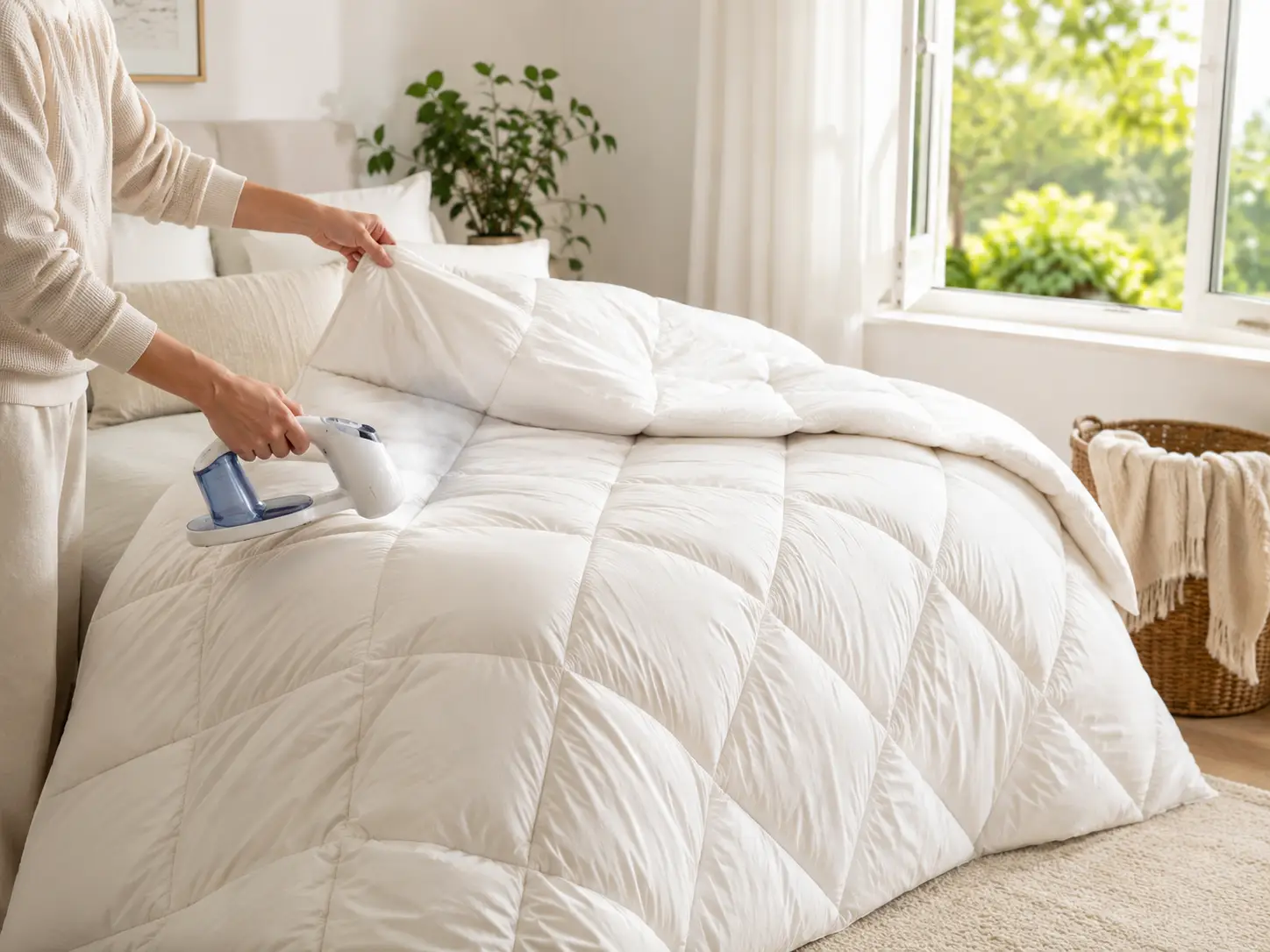
Compare six ways to refresh a dry-clean-only comforter, with clear limits for dryer kits, steam, fabric spray, spot treatment, and dryer balls.