

As an affiliate, we may earn a commission from qualifying purchases. We get commissions for purchases made through links on this website from Amazon and other third parties.
A good bed vacuum should make it easier to lift loose dust, lint, crumbs, hair, and other dry debris from a mattress without turning sheet-change day into a workout. The extras can look impressive, but the parts that matter most are simpler: steady suction, useful brush or tapping action, a head you can push across fabric, and a dust cup that is not constantly in the way.
The practical comparison for mattress-vacuum effectiveness includes build quality, dimensions, everyday care, and expected use.
The biggest choice is corded versus cordless. Cordless models are easier to carry from a mattress to a sofa or pet bed, but their battery and suction can feel less predictable over a long session. Corded models keep running as long as you need them, though a heavier body and a 16-foot cord can be less convenient around a large room.
To judge mattress-vacuum buying criteria, consider materials, construction, fit, maintenance, and intended use together.
UV-C lights, ultrasonic modes, warm air, aroma compartments, and dust sensors are secondary features here. They may change how the machine feels to use, but they should not replace basic debris pickup or sensible mattress care. None of these home vacuums should be treated as proof that a mattress is sanitized, allergen-free, or free of pests.
Suitable tools for vacuuming a bed need controlled suction, a clean upholstery head, and no sharp edges that could snag the cover.
Best Overall
Best Lightweight Cordless
Best for Pet Hair
Bed Vacuums at a Glance
| Pick | Power | Suction | Handling | Main tradeoff |
|---|---|---|---|---|
| AIRTHEREAL M1 | 400 W corded | 14 kPa | 4.85 lb, 16.4 ft cord, dual rollers | 0.25 L cup is the smallest here |
| FEPPO | Cordless | 18 kPa | 2.9 lb, up to 30 min runtime | Suction and battery comments are mixed |
| Saker | Corded | 16 kPa | 16.4 ft cord, 36,000 RPM tapping | Early failure and weak-suction complaints exist |
| Teant | Cordless | 18 kPa | Two speeds, 0.5 L dual cups | Pickup is sharply mixed; runtime can fall short of the maximum |
| JIGOO J300 | 500 W corded | 13 kPa | 16 ft cord, sensor, dual cups | Heavier feel and modest suction advantage |
| Jimmy JV35 | 480 W corded | 14 kPa | 0.5 L cup, 16.4 ft cord, wide head | 7.93 lb and some early reliability complaints |
A higher suction number does not automatically make one model the better cleaner. Brush action, how flat the head stays on the mattress, filter condition, and the speed of your passes all affect what reaches the cup. That is why a 14 kPa corded model can make more sense than an 18 kPa cordless one if you value steady agitation and uninterrupted runtime.
Useful mattress-vacuum use cases include lifting surface debris and hair between deeper cleanings, not replacing stain or pest treatment.
Our Six Picks
1 / 6
AIRTHEREAL M1 Mattress Vacuum

Power
400 W corded
Suction
14 kPa
Weight
4.85 lb
Cord
16.4 ft
Dust cup
0.25 L
The AIRTHEREAL M1 earns the top spot because its strongest feature is physical agitation rather than a long list of add-ons. Two brushrolls rotate at up to 80,000 RPM while a 400-watt corded motor provides 14 kPa suction. It also has a dust sensor, HEPA filtration, heated air up to 140°F, UV-C, and ultrasonic action. At 4.85 pounds, it sits in the middle of this group for handling.
The dust sensor is useful during slow, overlapping passes. When the machine detects more debris, the indicator changes and suction can increase; as the surface clears, it shifts back. That gives you a practical cue for where to spend more time without relying on a fixed number of passes. The 16.4-foot cord is also long enough for most beds if there is an outlet near the room perimeter.
Pickup can be effective for fine debris and cat hair, and the head can glide easily across mattresses and couches. The main inconvenience is the 0.25-liter cup. It is half the size of several 0.5-liter designs here, so a dusty mattress or a house with pets can mean more frequent emptying. That is a fair trade if you care more about brush action and automatic dust response than cup capacity.
Why It Works
- Dual brushrolls give the mattress repeated mechanical agitation before debris reaches the intake.
- Corded power keeps suction available through a full mattress, sofa, or multi-bed session.
- The dust sensor provides a simple visual cue for slowing down over dirtier areas.
- A 16.4-foot cord gives useful reach without moving outlets as often.
What To Keep In Mind
- The 0.25-liter cup fills faster than the 0.5-liter cups on larger rivals.
- At 4.85 pounds, it is not as effortless to guide as the 2.9-pound FEPPO.
- Treat the heated air and UV-C as secondary features, not a substitute for normal cleaning and mattress-care steps.
2 / 6
FEPPO Cordless Mattress Vacuum

Power
Cordless
Suction
18 kPa
Weight
2.9 lb
Runtime
Up to 30 min
Filter
HEPA
FEPPO is the easiest pick to lift and move around. It weighs 2.9 pounds, runs on a battery, and reaches 18 kPa suction on its higher setting. HEPA filtration, a dust sensor, UV-C, ultrasonic action, and an LED display round out the feature set, but the low weight and lack of a cord are the real reasons to choose it.
That handling advantage matters when you clean more than the top of a mattress. A lighter body is easier to guide along the edges, across a sofa, or up stairs to another bedroom. The battery can run for up to 30 minutes, and a thermal shield shuts the machine down if a long session pushes it too hot. After that kind of shutdown, it needs cooling time before you continue.
The tradeoff is consistency: suction can feel ordinary rather than especially strong, while pickup and battery life vary. The UV-C window is also narrow, so anyone using that feature needs overlapping strokes to cover the full surface. The cordless size and weight remain clear handling advantages. This is the better fit for quick, regular mattress passes than for marathon cleaning sessions.
Why It Works
- The 2.9-pound body is the lightest option in this group.
- Cordless operation makes it simple to move between beds, sofas, stairs, and upholstered chairs.
- Two power levels let you trade runtime for stronger pickup when needed.
- The dust sensor can help you slow down where more dry debris is coming up.
What To Keep In Mind
- Up to 30 minutes of runtime is enough for routine work, but it is not unlimited.
- Suction comments range from useful to disappointing.
- The narrow light window makes overlapping passes important if you use the UV-C feature.
- A thermal shutdown can interrupt a long session until the machine cools.
3 / 6
Saker Mattress Vacuum Cleaner

Power
Corded
Suction
16 kPa
Tapping
36,000 RPM
Cord
16.4 ft
Filter
HEPA
Saker is the strongest pet-hair option in this group because its cleaning system is built around suction, tapping, and debris separation. The corded motor provides 16 kPa suction, while the roller taps at 36,000 RPM. A five-stage filtration setup and three-cup separation system are intended to keep hair apart from finer material before it reaches the filter.
That design is useful in a home where hair is the mess you notice first. It can pick up hair and fine material from beds and sofas, and the 16.4-foot cord makes it easier to work around a full-size mattress without stopping to charge. The roller can also be pulled out for cleaning, which matters when long hair or pet fur winds around moving parts.
There are real reliability concerns, though, including total failure after about a month and sharply mixed suction performance. That makes Saker a stronger fit for someone who values hair handling and a long cord than for a buyer whose top priority is a spotless durability record. Its aroma compartment is optional; there is no need to use scent pads if you prefer fragrance-free cleaning.
Why It Works
- A 16 kPa corded setup offers more suction on paper than the other corded models here.
- The 36,000 RPM tapping action helps loosen hair and fine dry material from fabric.
- Three-cup separation gives hair a path away from finer dust and the filter.
- The removable roller is easier to clear when pet hair wraps around it.
What To Keep In Mind
- Early failure has occurred, so long-term reliability is less reassuring than the feature list.
- Suction performance is not consistent across households.
- Use only compatible dry scent pads in the aroma compartment, or leave it empty if fragrance is unwanted.
- Keep the roller clear of loose threads, fringe, and slack bedding.
4 / 6
Teant Upgrade Cordless Mattress Vacuum

Power
Cordless
Suction
18 kPa
Speeds
2
Dust cups
Dual 0.5 L
Runtime
Up to 60 min low mode
Teant is the cordless option for shoppers who want more working time and a larger collection setup. It combines 18 kPa suction with two speeds, a 33,000-RPM roller, HEPA filtration, dual 0.5-liter cups, a dust display, 149°F warm air, UV-C, ultrasonic action, and an aroma feature. The battery can run for up to 60 minutes on low power.
In practice, runtime can be closer to 45 minutes, which is still longer than the FEPPO's maximum. The larger cups are also helpful when you are cleaning several surfaces because you spend less time opening the machine. A display tracks the active functions and uses a color ring to show changing debris levels as you work.
Pickup is the weak point because performance ranges from strong debris collection to poor suction and very little material in the cup even after overlapping passes. The body can also feel awkward or bulky. Teant therefore makes most sense when cordless runtime and cup size matter more to you than having the most consistent pickup record in this group.
Why It Works
- Up to 60 minutes on low mode gives it the longest cordless ceiling here.
- Dual 0.5-liter cups provide more collection room than smaller handheld designs.
- Two speeds let you choose between longer runtime and stronger cleaning effort.
- The roller and dust display give you more feedback than a suction-only handheld.
What To Keep In Mind
- Real runtime can be closer to 45 minutes depending on mode and workload.
- Pickup ranges from impressive to very weak.
- The larger cordless body may feel bulky compared with the lighter FEPPO.
- Warm air and fragrance are convenience extras, not reasons to overlook suction performance.
5 / 6
JIGOO J300 Bed Vacuum

Power
500 W corded
Suction
13 kPa
Brush speed
13,000 RPM
Cord
16 ft
Heat
130°F
The JIGOO J300 has the highest motor wattage in this group at 500 watts, but its suction figure is a more modest 13 kPa. A 13,000-RPM brush, dual cups, dust sensor, 130°F warm air, UV, ultrasonic action, and a 16-foot cord make it a feature-heavy corded option. Its heating function works only while the head is in direct contact with the mattress.
The dust-status system is the most useful extra. It calculates a dust level and changes the cleaning-status light as the surface clears. That can help you create a simple workflow: make slow overlapping passes, watch the status, then move on once the indicator settles. The cord means you can repeat that process over several beds without thinking about a battery.
The downside is handling. The body can feel heavier than expected, and its suction may offer little advantage over a regular household vacuum. Pet-hair pickup is more encouraging. JIGOO is therefore a practical middle choice when you want a dedicated flat head and an easy visual stopping cue, but it is not the model to buy purely for the biggest suction number.
Why It Works
- A dust-status light gives you a clear visual cue while you make overlapping passes.
- The cord supports repeated cleaning without charging breaks.
- Dual cups help separate collected material before it reaches the filter.
- The brush and flat head are suited to mattresses, beds, carpet, and other fabric surfaces.
What To Keep In Mind
- The 13 kPa suction figure trails the FEPPO, Teant, Saker, and 14 kPa corded models.
- The body can feel heavy during a full mattress session.
- Heat works only when the machine remains in contact with the surface.
- A green status light is a cleaning cue, not proof that a mattress is sanitized.
6 / 6
Jimmy JV35 Mattress Vacuum

Power
480 W corded
Suction
14 kPa
Weight
7.93 lb
Dust cup
0.5 L
Cord
16.4 ft
The Jimmy JV35 is built for broad, continuous passes. Its 480-watt corded motor produces 14 kPa suction, and a 240-millimeter intake gives it a wider path than a narrow handheld head. Tapping action, a 0.5-liter cup, HEPA filtration, warm air, UV-C, and a 16.4-foot cable add to the package.
That wide path can reduce the number of side-to-side strokes needed on a large mattress, and the head can handle pet hair on sofas. The 0.5-liter cup also gives you more room than the AIRTHEREAL's small bin. If you are cleaning several mattresses in one session, the combination of a large cup and corded runtime is convenient.
Weight and reliability put Jimmy last in the ranking. At 7.93 pounds, it is by far the heaviest handheld here. The vacuum and UV light can fail within fewer than ten uses, and suction performance is mixed, although the wide head can still provide useful pickup. It asks for the biggest compromise in this group: you need to be comfortable handling almost eight pounds while accepting a mixed durability record.
Why It Works
- The 240-millimeter intake covers a broad strip of mattress on each pass.
- A 0.5-liter cup reduces how often you need to empty collected debris.
- The 16.4-foot cord supports long sessions without battery planning.
- Pet-hair pickup on sofas is a practical strength for some households.
What To Keep In Mind
- The 7.93-pound body is substantially heavier than every other option here.
- Early vacuum and UV failure has occurred.
- Reassembly after emptying can be fussy.
- Its 14 kPa suction does not guarantee stronger pickup than a good household upholstery tool.
How to Choose the Right Bed Vacuum
Decide whether a separate bed vacuum is worth storing
A dedicated bed vacuum makes the most sense when you clean mattresses and upholstered furniture often enough to value a flat handheld head. If you already own a strong vacuum with a clean upholstery attachment, you may not gain much from another appliance unless tapping action, a dust sensor, low handheld weight, or pet-hair handling solves a specific problem.
Storage matters too. Cordless models need a place to charge. Corded models need room for the cable, and the larger bodies are not as easy to tuck into a small bedside closet. Think about where the machine will live between uses before choosing the most feature-heavy option.
Pick corded or cordless based on your cleaning routine
Cordless models are convenient for quick passes and multi-room work. FEPPO is especially easy to carry at 2.9 pounds, while Teant gives you more battery time and larger cups. Both remove the need to drag a cable around the bed frame.
Corded models are better when you clean several mattresses, a sofa, and pet beds in the same session. AIRTHEREAL, Saker, JIGOO, and Jimmy all provide roughly 16 feet of cable, so the real question is whether an outlet is close enough to let you reach both sides of the bed.
Do not choose cordless purely because you dislike cords if you routinely clean for an hour. Battery limits and cooling pauses can be more annoying than cable management. In the same way, do not choose corded if lifting a heavier body and moving the plug around the room would stop you from using the machine regularly.
Compare agitation, not suction alone
Suction pulls loose material into the cup, but agitation helps free material from the fabric surface first. AIRTHEREAL stands out with dual rollers rotating at up to 80,000 RPM. Saker uses 36,000-RPM tapping, Teant uses a 33,000-RPM roller, and JIGOO uses a 13,000-RPM brush.
Those figures describe different mechanisms, so they are not a clean speed contest. What matters is whether the head stays flat, moves smoothly, and loosens dry debris without catching the mattress cover. If a machine skips, grabs fabric, or forces you to rush, a larger number on the box will not fix the problem.
Use slow overlapping strokes. A mattress is wide, and a narrow head can leave strips untouched if every pass is spaced too far apart. Overlap also makes dust-sensor feedback more useful because you are comparing neighboring sections instead of jumping around the bed.
Match weight to the person doing the cleaning
A few pounds makes a big difference when you are pushing a handheld machine across a king mattress. FEPPO is the lightest at 2.9 pounds. AIRTHEREAL is 4.85 pounds. Jimmy reaches 7.93 pounds, which is a major jump once your arm is extended over the center of the bed.
If wrist, shoulder, or grip fatigue is a concern, favor the lighter machine even if a heavier option has a larger cup or wider head. Cleaning tools only help when they are comfortable enough to use. A vacuum that stays in the closet because it feels awkward is a poor fit.
Head shape also affects effort. A wide intake covers more area, but a compact head can be easier around seams, corners, and sofa cushions. There is no single best size for every room.
Look at cup size and filter upkeep together
A larger cup reduces interruptions, but the filter still needs attention. AIRTHEREAL's 0.25-liter cup is the smallest here. Teant and Jimmy both provide 0.5-liter capacity, giving them more room for hair and fine debris during longer sessions.
Emptying before the cup is packed helps preserve airflow. Hair wrapped around a roller can also reduce pickup, especially in a home with dogs or cats. Saker's removable roller is useful for that reason.
Only wash parts that are designed to be washed, and let washable filters dry fully before reinstalling them. Running a vacuum with a damp filter can hurt airflow and create a mess inside the machine. If the product uses replaceable filters, keep the part number somewhere easy to find rather than waiting until the original is worn out.
Treat heat, UV-C, and ultrasonic modes as extras
Several models combine warm air, UV-C, and ultrasonic output with vacuuming. These features should not be the reason you ignore poor suction, awkward weight, or a weak durability record.
Warm air can help reduce surface dampness during a pass, but it is not a stain remover and does not replace proper drying after wet cleaning. UV-C lights in these handheld units depend on contact, coverage, and pass speed. A narrow light window also means gaps are easy to leave. Ultrasonic features do not change the need for physical debris removal.
The safest buying mindset is simple: choose the machine for suction, agitation, handling, and maintenance first. Treat the electronic extras as secondary convenience features.
Use a simple pass pattern
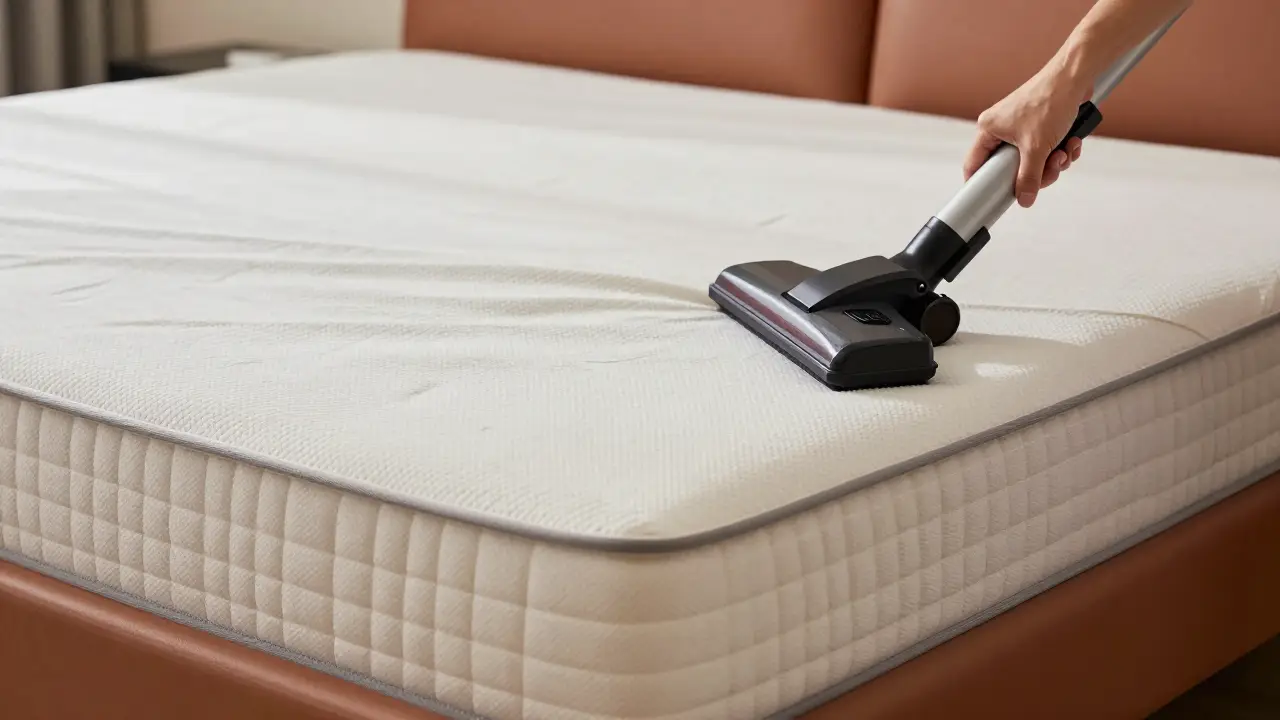
Strip the bed so the mattress surface is exposed. Remove loose objects and make sure there are no cords, fringe, or thin fabric that could be pulled into the roller. Start at one corner and move in slow, overlapping rows from the head of the bed to the foot.
On a dust-sensor model, slow down when the indicator shows more material. Make a second pass at a right angle if the mattress has collected a lot of lint or pet hair. Empty the cup when it approaches its practical fill limit rather than forcing the machine to pull through a packed chamber.
Pay attention to heat and battery warnings. If a cordless model shuts down for temperature protection, give it the required cooling period. If a roller stops because of a tangle, switch the machine off before clearing it.
Keep expectations realistic
A bed vacuum is a dry-cleaning tool for loose material. It will not remove a liquid stain the way a proper upholstery extractor can, and it should not be used to suck up wet cleaning solution unless the machine is specifically made for wet pickup.
It also cannot prove that a mattress is free of mites, allergens, bacteria, or bed bugs. Those concerns may require different cleaning methods or professional pest treatment. The most useful outcome here is straightforward: less loose dust, hair, lint, and debris sitting on the mattress surface.
Frequently Asked Questions
What is the best bed vacuum overall?
The AIRTHEREAL M1 is the strongest all-around choice here because it combines steady corded power, dual brushroll agitation, a dust sensor, a manageable 4.85-pound body, and a 16.4-foot cord. Its small 0.25-liter cup is the main compromise.
Is a bed vacuum better than a regular vacuum for a mattress?
A bed vacuum can be easier to guide because the head is designed to stay flat on fabric and may add tapping, brush action, or dust feedback. A regular vacuum with a clean upholstery attachment can still handle basic loose debris well, so a separate machine is most useful when its specialized head or handling solves a real problem for you.
Do bed vacuums remove dust mites or allergens?
They can collect loose dust and particles from the mattress surface, but a home vacuum pass does not guarantee removal of every mite or allergen. UV-C, warm air, and ultrasonic modes should not be treated as medical or sanitation proof.
Which bed vacuum is best for pet hair?
Saker is the strongest pet-hair fit in this group because it combines 16 kPa corded suction, 36,000-RPM tapping, a three-cup separation system, and a removable roller. Its durability and suction comments are mixed, so the pet-hair design comes with a reliability tradeoff.
Is a cordless mattress vacuum powerful enough?
It can be. FEPPO and Teant both provide 18 kPa suction figures, but real pickup varies and battery limits still matter. Cordless is best when easy movement matters more than unlimited runtime.
How often should I vacuum a mattress?
Vacuum it when the surface collects visible lint, crumbs, hair, or dust, and consider making it part of sheet-change day if pets share the bed. A cleaner household may need it less often. The right schedule depends on how quickly dry debris returns.
Can I use a bed vacuum on sheets, blankets, and sofas?
Many models here are intended for mattresses and upholstered furniture, but loose sheets and thin blankets can be pulled toward the roller or intake. Keep fabric flat, avoid fringe and loose threads, and use the surface guidance for the specific machine.
Next, learn how to vacuum a mattress at home, compare mattress vacuums with regular vacuums, or see the best mattress vacuums for pet hair if shedding is your main problem.
