

As an affiliate, we may earn a commission from qualifying purchases. We get commissions for purchases made through links on this website from Amazon and other third parties.
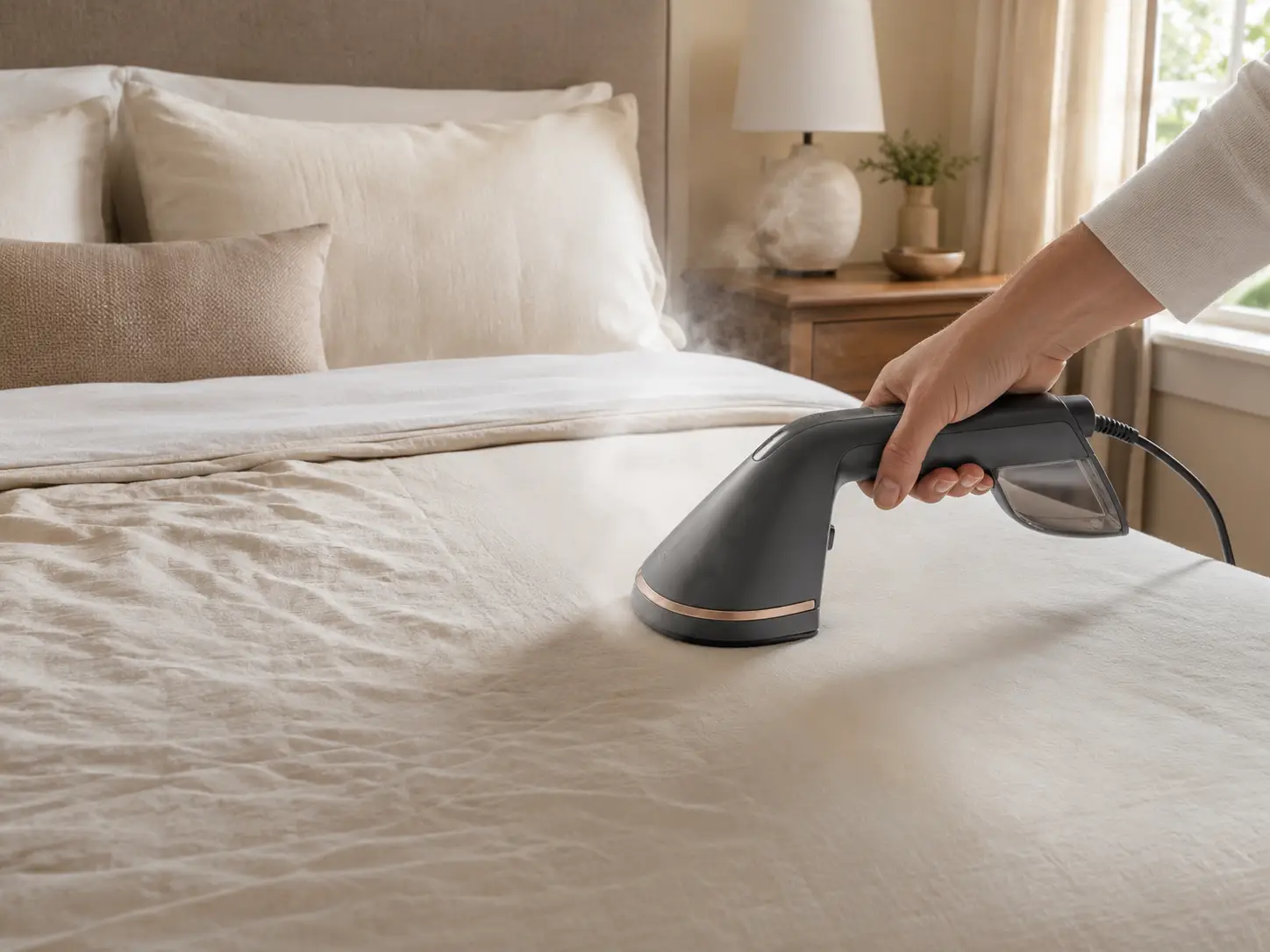
Bedding can take far longer to steam than a shirt, so runtime and reach matter as much as raw power. A handheld is convenient for a duvet cover, bed skirt, or a few pillow shams. A standing steamer makes more sense when you regularly work across quilts, several bed surfaces, or other large household textiles.
Evaluating handheld-steamer value means weighing performance, durability, maintenance, limitations, and total cost rather than one headline feature.
Steam is a wrinkle-release tool here, not a replacement for washing. Check the textile care label, test a hidden area, keep the head moving, and let every treated surface dry completely before putting the bed back into use.
When comparing handheld steamers for fabric furnishings, prioritize relevant dimensions, durable construction, manageable care, and the intended role.
Best Overall Handheld
Best for Long Sessions
Best for Cord Reach
Quick Comparison
| Pick | Format | Runtime/reach | Best fit |
|---|---|---|---|
| Conair Turbo ExtremeSteam | Handheld | Up to 20 min | Fabric control and mixed bedding touch-ups |
| Jiffy J-2000 | Standing | About 90 min | Quilts and multiple large surfaces |
| Rowenta X-Cel | Handheld | 9.84-ft cord | Horizontal use around a large bed |
| Electrolux | Handheld | 18 min | Balanced horizontal and vertical use |
| Conair ExtremeSteam 1200W | Handheld | 15 min, 9-ft cord | Lower-power reach for lighter jobs |
The 5 Best Steamers for Bedding
1 / 5
Conair Turbo ExtremeSteam 1875W

Power
1875 W
Heat-up
40 seconds
Tank
7.3 oz
Runtime
Up to 20 minutes
Conair Turbo ExtremeSteam is the best all-around handheld because its 20-minute supported runtime is paired with useful fabric-control attachments. The silicone band helps hold fabric taut, the delicate spacer adds separation for finer trims, and the bristle brush is intended for thicker material.
For steaming bedding safely, follow the care label, keep the head moving, avoid saturation, and let the item dry completely.
That kit is more valuable on bedding than wattage alone. You can move from a pillow sham to a heavier cover without treating every surface identically. The tradeoffs are weight, occasional water spitting, and reports of early failure. Use the water type specified by the product and stop if hot water begins coming from the head.
A sound decision about steamers for bulky comforters accounts for fit, construction, fabric or fill, care, and realistic daily use.
Why It Works
- Up to 20 minutes of steam suits a longer handheld session.
- Three attachments help manage different fabric surfaces.
- Strong output and quick warm-up reduce repeated passes on ordinary wrinkles.
What To Keep In Mind
- The handheld can feel heavy during extended use.
- Water spitting can mark or soak bedding.
- Use the delicate attachment only where the fabric care guidance permits steam.
2 / 5
Jiffy J-2000 Garment Steamer

Format
Standing steamer
Power
1300 W
Runtime
About 90 minutes
Hose
5.5 ft
Jiffy J-2000 is the endurance pick. Its reservoir supports about 90 minutes of steam, and the 5.5-foot hose with a six-inch plastic head can reach across quilts and other large textiles without holding the water tank in your hand. Customer material also includes direct quilt use on a frame.
A standing steamer takes more storage space and setup than a handheld, but that is the tradeoff for far fewer refill stops. The head gets hot, so give it a safe rest location and turn the unit off to cool when you are not actively steaming.
Why It Works
- About 90 minutes of runtime suits large bedding jobs.
- Hose separates the water reservoir from the handpiece.
- Three-year warranty supports a tool intended for repeated use.
What To Keep In Mind
- Requires floor and storage space.
- Steam output can feel modest to some users.
- Keep the hot head away from hands, bedding fill, and unprotected surfaces when resting it.
3 / 5
Rowenta X-Cel Handheld Steamer

Power
1875 W
Heat-up
25 seconds
Tank
190 ml
Cord
9.84 ft
Rowenta X-Cel is the easiest handheld to move around a large bed because its 9.84-foot cord provides more reach than the other corded handhelds here. It heats in about 25 seconds and supports horizontal use, which is useful for flat duvet covers, pet beds, and furniture.
The weakness is water control. Puddling, leaks, frequent refills, and units that stop producing steam appear in customer experiences. Keep the reservoir properly seated and test the steamer away from the visible center of the bed before starting a long horizontal session.
Why It Works
- Extra-long cord improves movement around a bed.
- Horizontal support fits flat bedding surfaces.
- Fast heat-up is convenient for short touch-ups.
What To Keep In Mind
- Water leakage and puddling are the main risks.
- The unit can feel heavy during vertical work.
- A long cord still needs a clear path to prevent trips or pulling the hot tool.
4 / 5
Electrolux Handheld Fabric Steamer

Power
1500 W
Heat-up
30 seconds
Runtime
18 minutes
Use
Horizontal or vertical
Electrolux offers a practical middle ground: 18 minutes of continuous steam, 30-second warm-up, horizontal and vertical use, and a two-in-one fabric and lint brush. That makes it useful for a mixed bedroom routine without stepping up to a standing system.
Its repeated weak point is pump durability. Some units still heat but stop producing steam after limited ownership. Drain and store the reservoir as directed, and do not respond to weak output by holding the hot head longer against the fabric.
Why It Works
- Eighteen-minute runtime covers more than a quick garment-sized job.
- Horizontal and vertical modes suit several bedding positions.
- Fabric/lint attachment adds surface finishing.
What To Keep In Mind
- Pump failure is a recurring ownership concern.
- Reservoir drying can be awkward.
- Let the bedding dry fully after treatment.
5 / 5
Conair ExtremeSteam 1200W Handheld

Power
1200 W
Heat-up
45 seconds
Runtime
15 minutes
Cord
9 ft
The 1200-watt Conair is the lower-power reach option. It supports curtains and upholstery, uses a removable tank, runs for about 15 minutes, and has a nine-foot cord. That combination is suitable for lighter bedding touch-ups where compact storage matters more than maximum output.
An unreliable weight figure appears in some product data, so weight is not a useful buying point here. More importantly, repeated customer experiences describe the unit heating without producing steam after limited use. That reliability concern keeps it behind the newer handhelds.
Why It Works
- Nine-foot cord gives useful reach.
- Removable tank simplifies filling.
- Fifteen-minute runtime is adequate for small bedding sections.
What To Keep In Mind
- Reliability of the steam system is the main concern.
- Lower power may require additional passes on deeper wrinkles.
- Judge handling by the actual unit rather than an unreliable weight figure.
How to Steam Bedding Without Creating a Moisture Problem
Check the shell and fill
The outer fabric may tolerate steam while foam, down, batting, coatings, adhesives, electric components, or specialty finishes do not. A care label or manufacturer instruction that rules out heat or moisture takes priority.
Use horizontal mode only when supported
Do not tilt a vertical-only steamer over a flat bed. Models designed for horizontal use are less likely to send hot water toward the fabric when held in that orientation.
Work in sections
Smooth one area, make steady passes, and move on. Do not soak a stubborn wrinkle by holding the head in place. A second light pass after the first area relaxes is safer than prolonged wet heat.
Plan your cord or hose route
Move the steamer base or outlet setup instead of stretching to the far corner. Keep cords away from walking paths and hoses free of tight kinks that can affect steam flow.
Dry everything before use
Leave the bedding open to airflow until the treated areas are fully dry. Thick comforters and padded pieces need more caution because surface dryness does not guarantee the fill is dry.
Frequently Asked Questions
What is the best steamer for bedding?
Conair Turbo ExtremeSteam is the best overall handheld here because it combines up to 20 minutes of runtime with useful fabric attachments. Jiffy J-2000 is better for long sessions across quilts or several large surfaces.
Is a standing steamer better for bedding?
It is better when runtime and refill frequency matter more than storage space. A handheld is easier for small sections, pillow shams, bed skirts, and occasional duvet-cover touch-ups.
Can I steam bedding horizontally?
Only with a steamer that supports horizontal use and bedding that permits steam. Keep the head moving and stop if the fabric becomes wet rather than lightly treated.
Can steam replace washing sheets or blankets?
No. Steam can relax wrinkles on compatible fabric, but it does not remove body oils, dirt, stains, or deep odor the way proper laundering does.
How long should bedding dry after steaming?
Drying time varies with fabric thickness, fill, room humidity, and how much steam you used. Wait until the treated material is completely dry before covering or sleeping on it.
Should I use distilled water in my steamer?
Use the water type required by the exact steamer. Low-mineral or distilled water may be specified for some models, especially where mineral buildup can affect the pump or steam path.
If you are deciding whether steam belongs in your bedding routine, whether fabric steamers are worth it compares them with ironing and washing. Before applying heat to a made bed, read where a steamer can be used on a bed for moisture and material cautions. For realistic wrinkle-removal expectations, how clothes steamers work on bedding covers sheets, covers, shams, and thicker items.
